A faint hum emanated from the server racks in the darkened datacenter, a sound that used to signal predictable digital commerce. Now, that hum is the prelude to something far more chaotic, far more data-hungry.
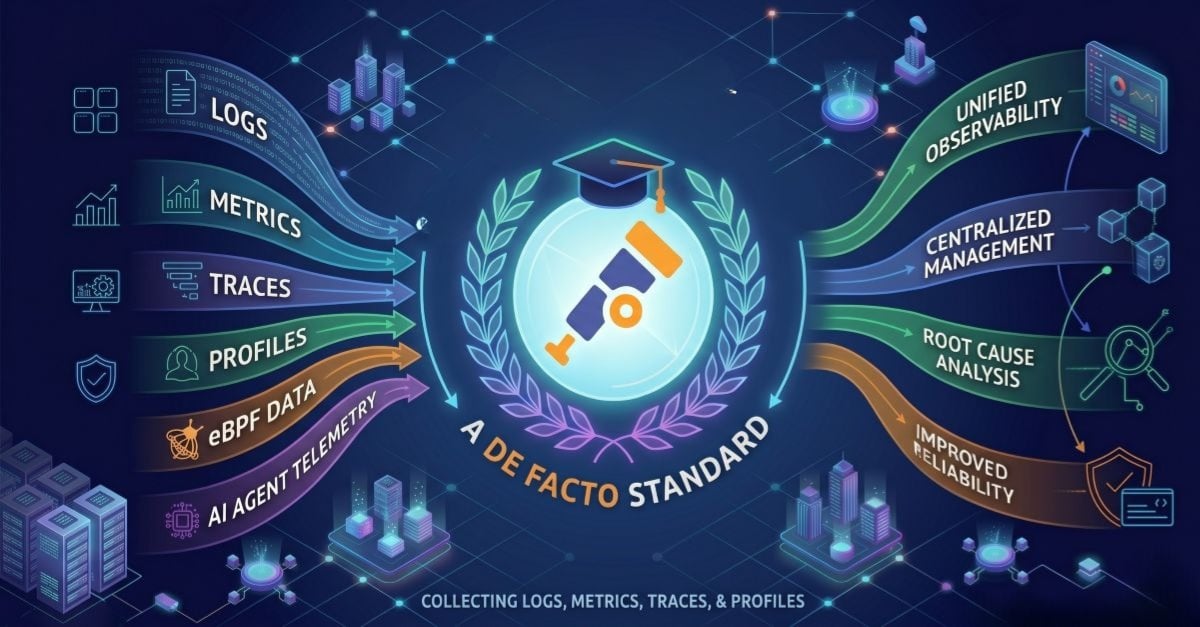
OpenTelemetry just achieved what the tech cognoscenti call “graduation” from the Cloud Native Computing Foundation (CNCF). Big deal, right? Well, maybe. After years of squabbling and then merging former rivals like OpenTracing and OpenCensus, this project has, rather quietly, morphed into the de facto standard for how modern apps cough up their internal workings – traces, metrics, the whole shebang. And timing, as they say, is everything. Especially when the industry is staring down a tidal wave of AI-driven applications that will spew out more telemetry than we’ve ever seen.
Mike Vizard, bless his persistent heart, sat down with Chris Aniszczyk of the CNCF. The takeaway? Graduation isn’t some grand finale; it’s more like the pit stop before the real race begins. Aniszczyk’s core argument? OTel’s true genius isn’t in any single bell or whistle. Nope. It’s in being that vendor-neutral, unsexy connective tissue. The kind that lets you finally ditch those clunky, legacy monitoring setups without getting shackled to the next generation of proprietary monitoring agents. Finally, some breathing room.
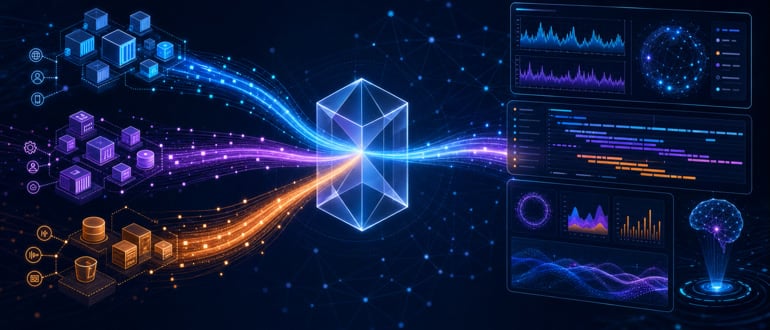
They even waded into the messy, practical stuff: how to actually run OTel at scale without your servers choking on a firehose of data. We’re talking about the eternal tug-of-war between sampling and cost control. And how clever folks are using OTel’s inherent flexibility to even peek inside systems that were never built with observability in mind. It’s like trying to install a security camera in a medieval castle. The collector model Aniszczyk mentioned, though — that’s where platform teams get a single point to dictate how data looks, cut down on duplicate tools, and ship that precious telemetry exactly where it needs to go. Efficiency, or at least the illusion of it.
The AI Observability Question
But here’s the bigger, more unsettling thread: what does observability even mean when AI agents become standard-issue players in production? We’re not just talking about tracing a simple API call anymore. Now, it’s about following the breadcrumbs of autonomous workflows. This means tracking decisions across model inferences, random tool invocations, and a cascade of downstream services. And we’re not just talking about latency; token usage, the exact prompt that guided a decision, the intermediate reasoning steps – all of it needs to be captured. Aniszczyk’s contention is that this level of detailed traceability is utterly impossible without open standards. And frankly, he’s not wrong. The work happening in OTel right now is the difference between keeping these increasingly complex AI agentic workloads debuggable and letting them spiral into an inscrutable black box as they scale. Who’s actually making money on this? For now, everyone who builds monitoring tools, and the companies that can afford to implement and manage it. The long-term play is massive, though. If you can’t observe it, you can’t control it, and you certainly can’t iterate on it effectively.
Aniszczyk makes the case that open standards are the only realistic foundation for that kind of traceability, and that the work happening inside OTel right now is what will determine whether agentic workloads stay debuggable as they scale.
This isn’t just about better dashboards. It’s about fundamental control over systems that are about to become orders of magnitude more complex. The question isn’t if AI agents will be in production, but how we’ll manage to debug them when they inevitably go sideways. OpenTelemetry, in its newly graduated form, is positioning itself as the essential, if unglamorous, answer.
Why Does Vendor Neutrality Matter for Observability?
For two decades, I’ve watched companies get burned trying to build their monitoring stacks on proprietary solutions. You get locked in. Suddenly, your data is in their format, accessible only through their dashboards, and good luck migrating when their pricing changes or they decide to sunset a product. OpenTelemetry, by aiming for vendor neutrality, is essentially building the equivalent of an open electrical socket for telemetry data. You can plug in whatever monitoring tool you want – Datadog, Splunk, Prometheus, or some shiny new AI-powered solution – and it should (in theory) just work. This decentralization of the vendor ecosystem is a massive win for users, fostering competition and preventing vendor lock-in from becoming the next big headache.
This graduation is more than a feather in the CNCF’s cap. It’s a signal that the foundational infrastructure for the next era of computing – the AI era – is slowly but surely being laid down, in the open.