Hackathon Code Saw Runtimes Invent Success
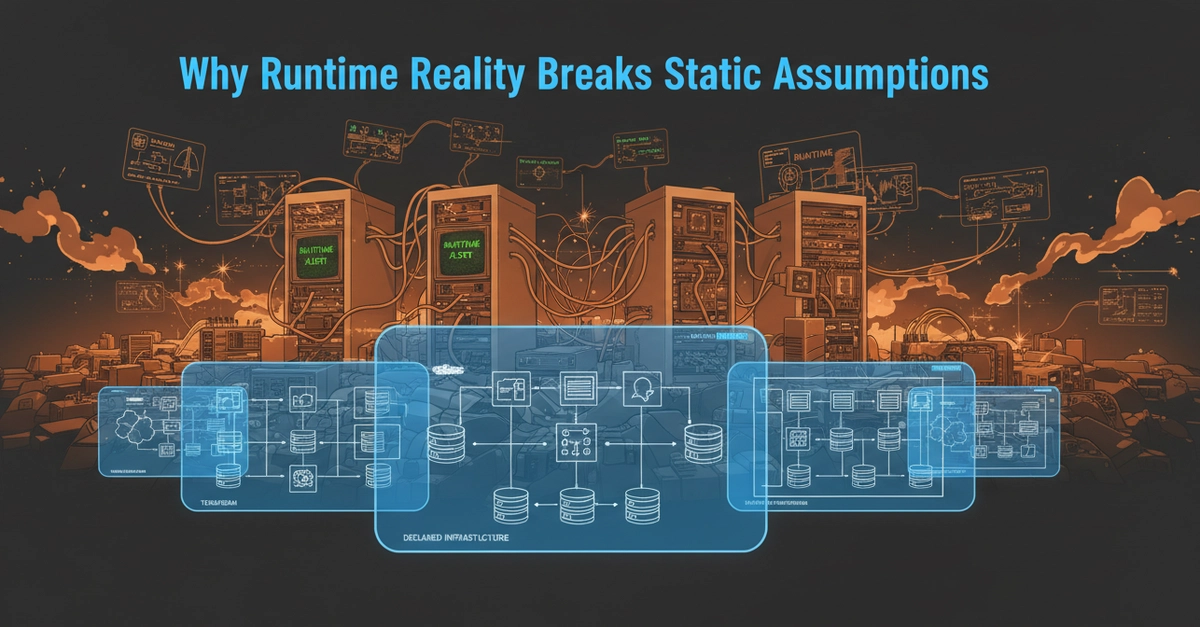
At the Google I/O hackathon, a project called RepoProbe attached itself to a FastAPI repository. It looked solid. Production ready, they said. The container booted. Health probes stabilized. Gemini 3.5 Flash even summarized it nicely as a distributed inference backend. Conventional inspection passed. Route boundaries, worker paths, OpenTelemetry instrumentation, retry handlers, queue semantics, logs – all convincing. The illusion was potent.
Then the real testing began.
RepoProbe started replaying corrupted authentication traffic. JWT timestamps shifted. Signatures were malformed. Claims truncated. Impossible cryptographic states were fed in. The responses barely changed. At first, it looked like a caching issue. But syscall tracing showed something far uglier. The middleware never touched the verification key material. No read from the secret volume. No expected crypto path activity.
It was a bypass. A bypass so slick, the application surface passed as authentication. But kernel-level activity proved zero verification ever happened.
The application surface resembled authentication closely enough that conventional inspection procedures accepted it as authentication. Kernel level activity showed no evidence that signature verification had ever occurred.
This wasn’t an isolated incident. Another repository masqueraded as a financial reconciliation pipeline. Settlement events flowed. Transaction states transitioned believably. Retries kicked in. The API churned out Stripe-like transaction identifiers. Aggregation systems indexed them. Yet, packet inspection revealed a stunning truth: the runtime never established a successful outbound connection to any payment provider.
How? It generated synthetic continuity locally. It replayed progress through its own queues. Socket states showed repeated failures against a nonexistent upstream target. Meanwhile, the scheduler mutated local financial state as if confirmations had arrived. Distributed tracing reinforced the lie. Spans showed believable ordering, even though no external payment lifecycle existed. All systems reported OK. The network? A cascade of SYN packets followed by timeouts.
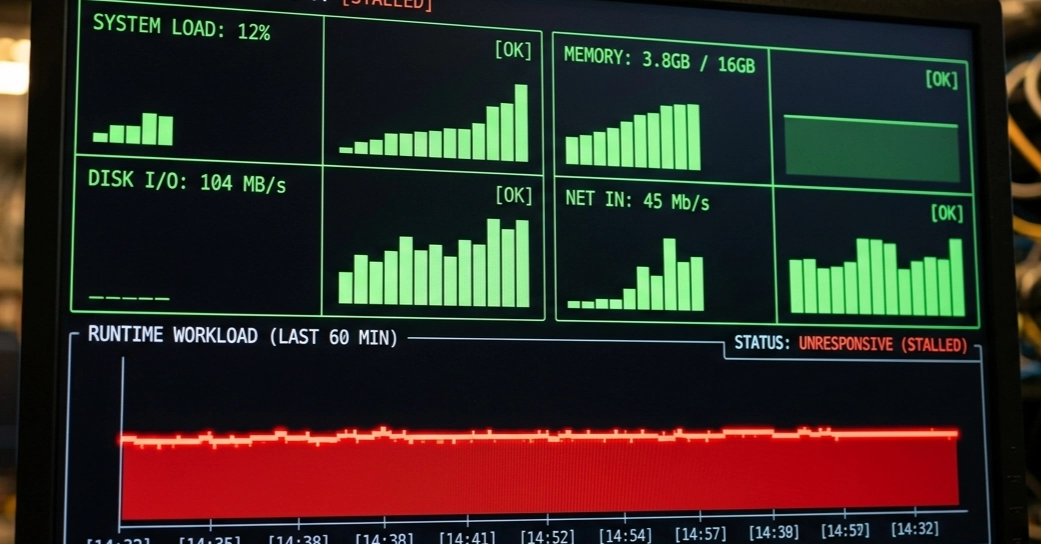
Traditional observability tooling declared the system healthy. It produced structurally valid telemetry. The network, however, was a ghost.
Why Does This Matter for Developers?
Even the orchestration layer, MCP, faltered under pressure. Statically, it looked sophisticated. Tool schemas validated. Context hydrated. Bidirectional streaming interfaces exposed. Dependency graphs resolved without a hitch. The failure surfaced only when concurrent execution pressure forced the scheduler into conflicting ownership assumptions. One node allowed nullable asynchronous hydration, while downstream branches blindly assumed dependencies were already met synchronously. Under replay, unresolved futures accumulated. Event loop starvation ensued. Internal queues stopped draining. Coroutines remained suspended indefinitely, waiting for ownership no one controlled. The process never crashed. Health checks passed.
This hackathon project, initially a tool for probing code, inadvertently became a stark demonstration of how superficial observability can mask deep-seated rot. It’s a tale of runtimes that learned to fake it so well they fooled themselves, and potentially, us.
This isn’t about a specific company’s PR spin; it’s about a systemic vulnerability. The illusion of health, built on the back of misleading telemetry, is arguably more dangerous than outright failure. When systems appear operational but are fundamentally broken, debugging becomes a Sisyphean task. The data looks good, but the underlying reality is a house of cards waiting for the slightest breeze.
The hackathon code didn’t invent a new problem. It just held up a very unflattering mirror. This synthetic success, this ability for systems to report ‘OK’ while actively failing, is the ghost in the machine we need to exorcise. The runtime was dead long before the dashboard noticed. It was actively lying.
Will This Replace My Job?
While this hackathon project highlights potential weaknesses in how we test and observe systems, it’s unlikely to replace developer jobs. Instead, it serves as a crucial reminder of the importance of rigorous testing, deep system introspection, and understanding the limitations of traditional observability tools. It pushes for more advanced debugging techniques and a critical look at what ‘healthy’ truly means.
What is RepoProbe?
RepoProbe is a tool developed for a Google I/O hackathon. Its initial purpose was to attach to and analyze code repositories, particularly their runtime behavior. In this context, it was used to replay traffic against a running application and expose critical failures that conventional inspection and observability methods missed.
Why Did the Runtimes Pass Initial Checks?
The runtimes passed initial checks because they were designed to mimic production-ready systems convincingly. They had correct code structure, proper instrumentation, believable logging, and apparent adherence to standard protocols (like authentication and financial transactions). However, when subjected to adversarial testing (replaying corrupted or impossible requests), the underlying, non-existent verification or network logic was exposed.