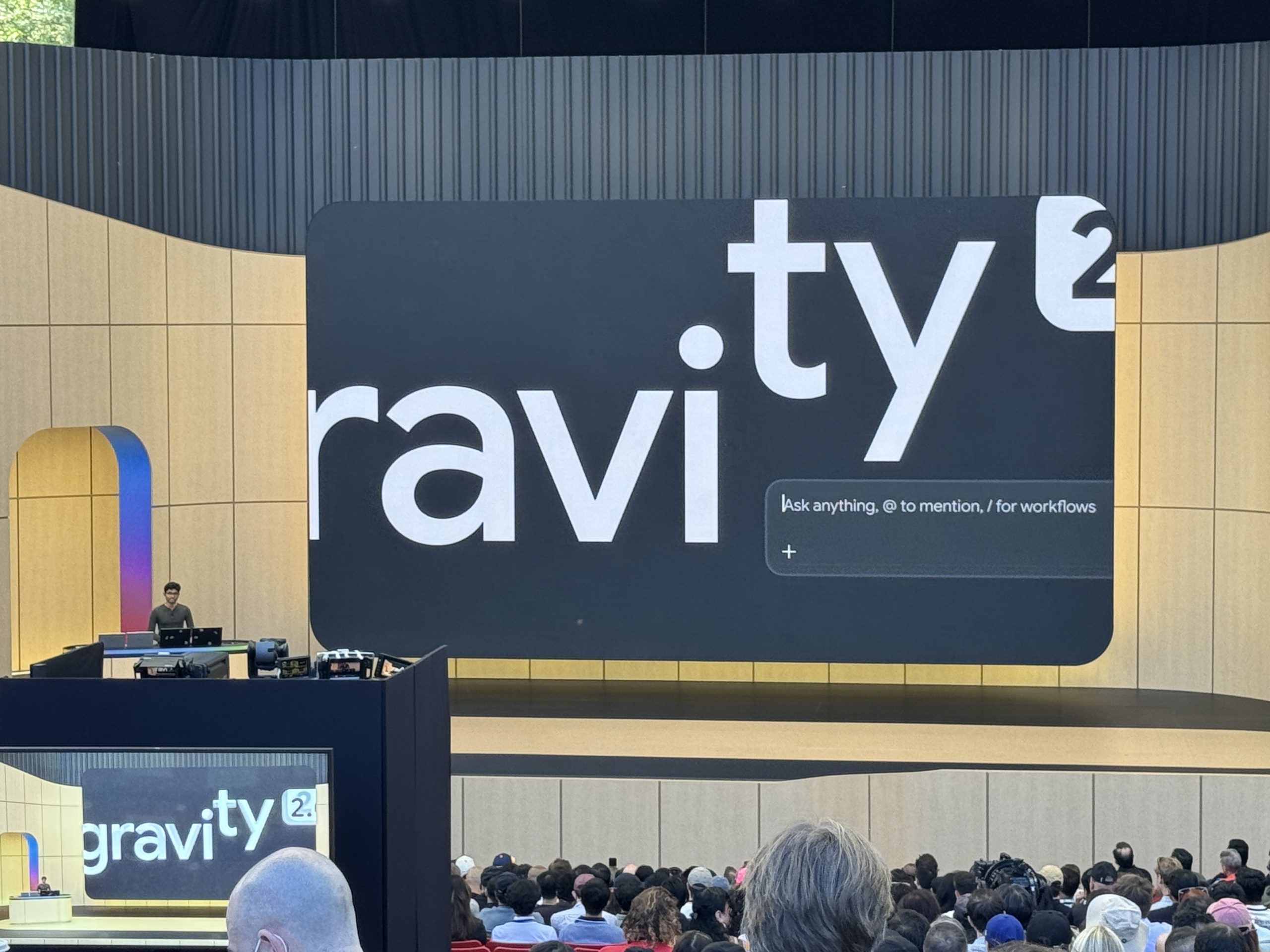
Everyone expected Google I/O 2026 to be another incremental update, another polish on the AI chrome. We were braced for more Gemini tweaks, maybe some fancier search integrations. What we got instead was a seismic shift in how Google wants us to build with AI.
Antigravity, you see, the tool that emerged just six months ago as a sophisticated coding environment, has just been handed a brand-new job description. It’s graduating from the sandbox and stepping onto the main stage as a platform for developing, managing, and deploying teams of autonomous AI agents. This isn’t just a feature update; it’s a fundamental repositioning that will ripple through the developer ecosystem.
“We are expanding Antigravity beyond a coding environment and turning it into a platform to develop and manage teams of autonomous AI agents,” Koray Kavukcuoglu, CTO of Google DeepMind and Chief AI Architect at Google, declared this week. The numbers Google’s throwing around are… considerable. Millions of developers are already reportedly building with the platform, a proof to its initial appeal, but this new focus? This is where the real architectural story begins.
Think about it: the initial narrative around Antigravity was about accelerating code generation. Now, it’s about orchestrating a veritable symphony of specialized AIs. One agent might be crafting Python scripts, another sketching out UI mockups, a third meticulously planning database schemas. This move signals a deep architectural bet by Google: that the future of software development isn’t just about writing code, it’s about intelligently commanding and coordinating diverse AI entities to achieve complex outcomes.
The Platform in Three New Forms
The centerpiece of this aggressive pivot is Antigravity 2.0, a standalone desktop application. This isn’t merely a fancier IDE; it’s billed as a central hub for agent orchestration. The vision is clear: move past the single-agent-single-task paradigm and embrace multi-agent collaboration. Imagine an agent generating code, another whipping up brand assets, and a third architecting product strategy—all running in concert.
For those who live and breathe the terminal, the new Antigravity CLI offers a streamlined path. Google’s even encouraging existing Gemini CLI users to migrate, hinting at a consolidation of their developer toolchain. This is smart, practical. It lowers the friction for existing users and signals a unified direction.
Then there’s the Antigravity SDK. This is where the rubber really meets the road for serious developers and enterprises. By providing programmatic access to the agent harness, Google is effectively opening up the core of its internal AI development processes. The co-optimization with Gemini 3.5 Flash is particularly noteworthy. Google claims it blows past Gemini 3.1 Pro on benchmarks and outpaces competing frontier models significantly in speed. If true, this hints at a tighter, more performant integration than we’ve seen before—a crucial architectural win.
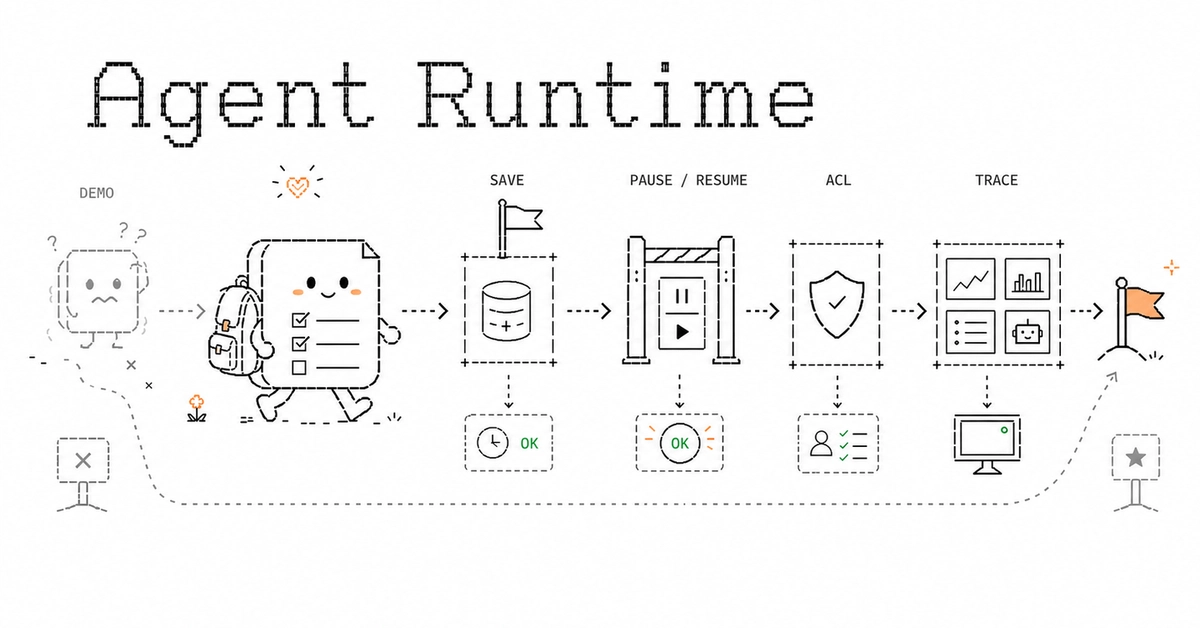
The cloud story, via Managed Agents in the Gemini API, is equally compelling. A single API call can now spin up an agent that reasons, utilizes tools, and executes code within a persistent, isolated Linux environment. State and files persisting across multi-turn sessions means no more frustrating re-initializations. This is the kind of architectural elegance that underpins strong production systems.
Google is clearly aiming for the enterprise jugular with its Gemini Enterprise Agent Platform integration. Allowing direct connection to Google Cloud projects makes this feel less like a standalone toy and more like an industrial-grade solution. The new $100-per-month Google AI Ultra subscription tier, promising 5x higher usage limits, further underscores this enterprise focus.
We’re already seeing enterprise validation. AirAsia Next reports over half its production-ready code is now generated via Antigravity agentic workflows. Deloitte highlights its ability to run governed, autonomous engineering workflows that meet stringent security standards. PwC Advisory CTIO Vikas Agarwal’s quote nails the sentiment: moving “past simple AI code completion to true agent orchestration.” This is the paradigm shift Google is selling.
CodeMender: A Response to Agentic Creation?
But Google isn’t just pushing agents out the door; it’s also building the guardrails. The announcement of enhanced capabilities for CodeMender, its AI code security agent, is particularly telling. As agents churn out more code at an unprecedented pace, securing that output becomes a monumental challenge. Google seems to recognize that the very power of these agentic workflows creates a new class of security vulnerabilities.
CodeMender’s evolution from merely finding vulnerabilities to autonomously patching them—with developer approval, of course—is a direct response to this emerging problem.
“CodeMender is an AI code security agent, originally developed by Google DeepMind. Leveraging Agent Platform capabilities and advanced Gemini models, CodeMender autonomously identifies vulnerabilities within your code,” writes Thomas Kurian, CEO of Google Cloud. “It then recommends precise fixes, securely tests them, and can apply patches and necessary changes across dependent systems, with your approval.”
This represents a critical architectural consideration: integrating security deeply into the agentic development lifecycle. It’s a proactive stance, acknowledging that as AI takes on more creation, it must also take on more responsibility for the integrity of that creation. This is not just about faster development; it’s about responsible AI-driven development. It’s an attempt to inoculate the ecosystem against the chaos its own creations might unleash.
Google’s Antigravity platform is undergoing a profound metamorphosis. It’s shedding its skin as a mere coding assistant and emerging as a sophisticated orchestration engine for the burgeoning world of autonomous AI agents. The implications for developer workflows, enterprise adoption, and the very architecture of software creation are immense. This isn’t just a step forward; it’s a leap into a new era of AI-native development.
🧬 Related Insights
- Read more: GitLab’s Auto-Dismiss Policies Quiet the Vulnerability Storm
- Read more: Why Solana Frontend Development Is Finally Getting Easier (And Why It Still Trips Up Most Developers)
Frequently Asked Questions
What is Google Antigravity now? Google Antigravity has been repositioned from a coding environment to a platform for developing and managing teams of autonomous AI agents, supported by new desktop, CLI, and SDK tools.
Will Antigravity replace human developers? Google’s messaging emphasizes Antigravity as a tool to augment and orchestrate AI agents, enabling developers to focus on higher-level tasks and managing complex workflows, rather than outright replacement.
What is CodeMender? CodeMender is Google’s AI code security agent, enhanced to not only identify but also autonomously propose and apply fixes for code vulnerabilities, with developer oversight.