Duckkit Unleashes Typed Events, Function Power
Forget the wild west of string-based event handling. Duckkit just dropped an update that's injecting much-needed type safety into JavaScript event emitters and streamlining function composition.
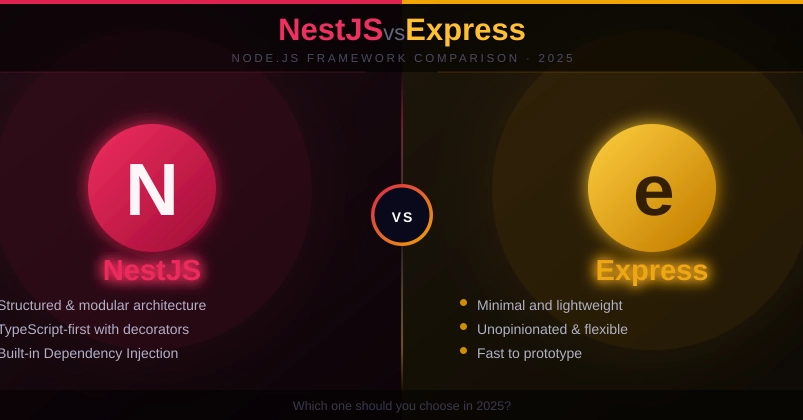
Choosing between NestJS and Express for your Node.js backend feels like picking a battleground. One's a minimalist battlefield, the other, a fortified city. Which wins your war?
Forget databases. This developer built a free Minecraft data API using only flat files and Git. It’s audacious. It works.
It turns out that a missing API key, intended for runtime, can bring your entire build process to a screeching halt. Fifteen lines of code might just be the unsung hero your CI pipeline needs.
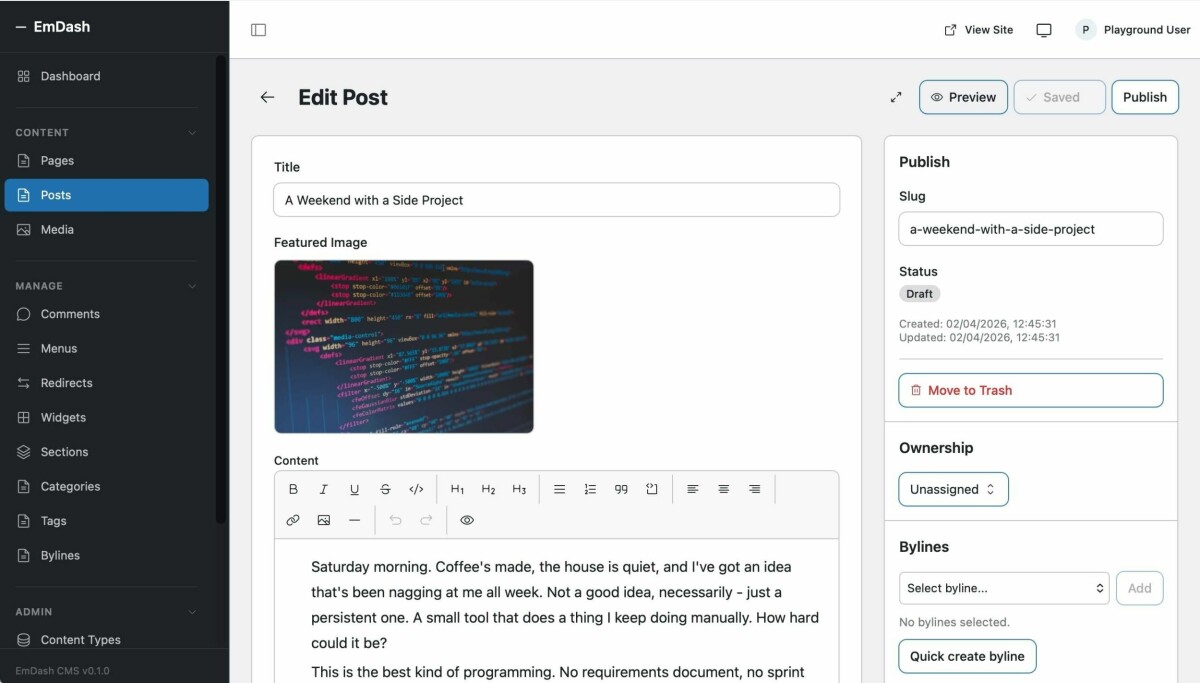
Cloudflare is betting big on AI to rewrite the foundational code of the internet's most popular CMS. But is this ambitious project a strategic masterstroke or a high-stakes gamble?
Building a developer portfolio? This isn't just a resume website. It's a product, a reflection of your architectural prowess. One dev proves it.
TypeScript catches compile-time errors beautifully—but the moment data hits your API endpoint, all that type safety evaporates. A new open-source library is betting developers will pay for runtime validation in a way the ecosystem hasn't seen before.
ByteDance just shipped a watershed moment for micro-frontends: Module Federation 2.0 decouples from webpack entirely, adds dynamic TypeScript hints, and runs on seven bundlers. But is the industry actually ready to ditch monorepos?
Python, JavaScript, and TypeScript dominate modern software development. Understanding their strengths, weaknesses, and ideal use cases helps you make the right choice for your project.