Here’s the thing: we all figured AI coding assistants would be the shiny new toy. You give it a prompt, it spits out perfect code. And for the most part, it does. Fixing bugs, adding tests, even generating documentation — it’s almost become mundane. But that’s only half the battle, isn’t it?
Development isn’t just lines of code. It’s a messy, context-rich tango. Think tasks, priorities, deadlines, project rules, past decisions, release constraints, and that nebulous concept of ‘Definition of Done.’ Your average AI chat bot? Utterly clueless.
It’s the developer who’s left to translate. Copy from the task tracker, paste into the AI. Get code, paste back. Update status, write notes, create follow-ups. Manually. Every. Single. Time. It’s like having a brilliant intern who only speaks binary.
And sure, that’s fine for the occasional query. But when AI becomes your daily co-pilot, this constant manual bridging between the AI’s universe and your project’s reality becomes a productivity black hole. A Kanban board is great for human eyes, but an AI agent doesn’t inherently grasp why one task trumps another or what ‘done’ truly signifies in your specific project.
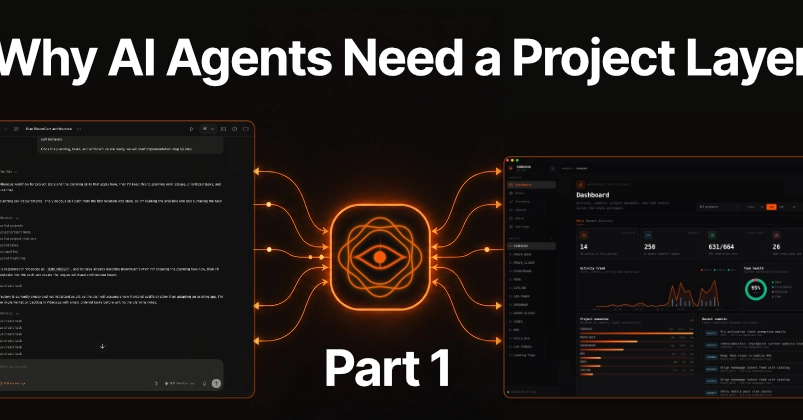
The Missing Piece: A Project Layer
We’ve seen attempts. Markdown files, Obsidian, Logseq – the self-hosted knowledge bases. And they have their merits. Easy to read, local files, Git integration, linked documents. You can even point an AI at a folder of these files.
But over time, the cracks show. These are text repositories, not workflow engines. The AI can read a file, sure. But can it reliably tell you which task is active? Which rules are mandatory? Which decisions are still valid? Where progress needs to be recorded? What actions are allowed versus merely suggested? How a task, a note, and a code change are interconnected?
No. Markdown, bless its simple heart, isn’t a project layer. It’s just a pile of notes.
For high-quality work, the agent often also needs project rules, active decisions, related documents, and notes.
This is precisely why the idea of a project layer is gaining traction. It’s not another task tracker. It’s not a replacement for your IDE or Git. It’s the intermediary. It translates the developer’s tacit knowledge—the stuff you keep in your head—into a format the AI can actually use. It answers not just ‘how should this code be written?’ but crucially, ‘within which project context should this code be written?’
Why Is This a Problem Now?
This isn’t about the AI’s intelligence. It’s about the AI’s context. We’ve built tools that are brilliant at code synthesis but lack a fundamental understanding of the work surrounding that code. It’s the difference between a gifted artist who can paint anything you describe and a collaborator who understands the client brief, the project timeline, and the existing brand guidelines.
The current approach forces developers to act as constant human glue, patching over the disconnect. This is inefficient, error-prone, and frankly, a colossal waste of developer talent. We’re paying AI to write code, only to spend more human time telling it what the code is for.
This is where concepts like MCP, the Model Context Protocol, come into play. It’s about giving AI clients a structured language to speak with external data and tools. Instead of just fix coupon validation, it becomes in Project X, Task Y, following Rule Z, update coupon validation for feature A, and note the change in document B. That’s a world of difference.
The promise of AI in development hinges on more than just code generation. It requires AI to grasp the holistic nature of software projects. Without this project layer, we’re still stuck in a more sophisticated, but ultimately still manual, workflow.
What’s Next?
This is just the first step. The architecture, the freeform boards, the Git integration, the specific tools—that’s all coming. But understanding this core problem, the need for a structured project context, is paramount. Because without it, AI coding assistants will remain brilliant tools for isolated tasks, never truly becoming integrated partners in the complex, human-driven process of building software.
🧬 Related Insights
- Read more: Publishing Flutter Apps to Apple Store? Don’t Get Caught Out.
- Read more: AI Shopping Bots: 1,000+ Sessions Reveal Who Really Delivers [Top Models]
Frequently Asked Questions
What is a project layer for AI? A project layer provides AI agents with structured access to the living state of a software project, including tasks, rules, decisions, notes, and workflow context, bridging the gap between AI code generation and the surrounding development process.
Can AI agents understand project context without a project layer? Currently, AI agents struggle to understand the full project context independently. Developers typically act as manual translators, copying information between AI sessions and project management systems.
What are the limitations of using Markdown files for AI project context? While Markdown is good for storing text, it lacks structure for conveying dynamic workflow states. It’s difficult for AI to reliably determine active tasks, mandatory rules, current decisions, or the specific meaning of ‘done’ from simple text files alone.