5,000 stars. Nearly 3,000 forks. All in one week. Andrej Karpathy drops a GitHub gist called LLM Wiki, and the AI world loses its mind.
Imagine this: every time you quiz an LLM, it doesn’t rummage through your docs like a frantic intern. No. It pulls from a living, breathing knowledge base it built itself—persistent, curated, always up to date. That’s the magic. Karpathy’s vision? A second brain for the AI age.
Why Karpathy’s Gist Feels Like the iPhone of Knowledge Management
Look, we’ve all been there—drowning in Slack threads, half-remembered meeting notes, that one post-mortem buried in your drive. LLMs were supposed to fix that, right? But nope. They hallucinate. They forget. Enter LLM Wiki: an LLM compiles your sources into a tidy, queryable wiki. No more context roulette.
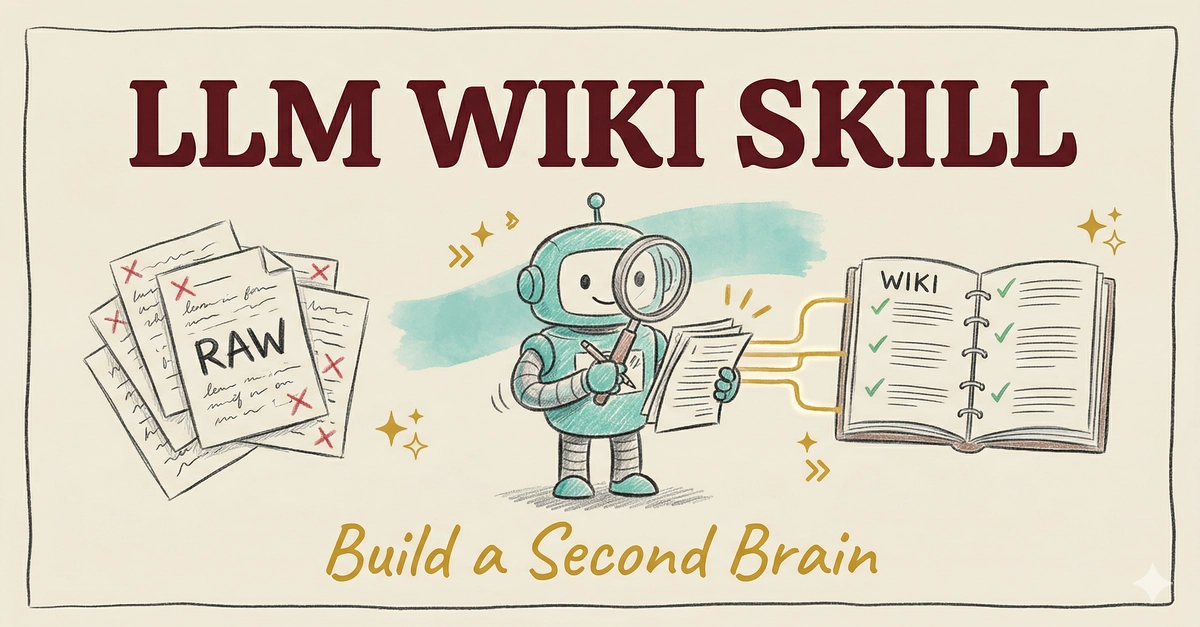
I grabbed the pattern and forged it into a Claude Code skill. Dead simple. Four commands — /wiki-init, /wiki-ingest, /wiki-query, /wiki-lint — and boom, you’re running your own neural knowledge fortress.
Here’s the thing. This isn’t just a toy. I tested it on real fire.
First: CTO Decision Wiki. Architecture calls, brutal post-mortems, those endless standup summaries? Ingest ‘em. Query: “What’s our stance on microservices vs monolith?” Answers synthesize across everything—no digging required. Slack becomes obsolete.
Second: Content Research Wiki. Every article source piles up. Cross-links sprout automatically. Contradictions? Flagged like red lights on a dashboard. It’s your brain, but turbocharged.
And — get this — it’s the capstone to Karpathy’s trilogy. First autoresearch (agents that optimize like pros). Then AgentHub (agents teaming up). Now LLM Wiki: agents that remember. Trilogy complete. Agents evolve from forgetful pets to wise elders.
“The idea: instead of retrieving documents every time you ask a question, have an LLM compile and maintain a persistent knowledge base.”
That’s Karpathy, straight from the gist. Chills, right? He’s not hyping corporate vaporware; this is raw, open-source gold.
How Does LLM Wiki Actually Work with Claude and Obsidian?
Boot it up. /wiki-init spins out templates—clean, Obsidian-ready Markdown pages. Think vault structure on steroids: hierarchical, linked, LLM-maintained.
Ingest phase? Feed it docs, notes, whatever. Claude chews through, extracts insights, builds wiki pages. Smart, not sloppy.
Query time. Ask anything. It doesn’t just regurgitate—it synthesizes, cites, connects dots you didn’t see.
Lint? Health check. Spots gaps, orphans, inconsistencies. Like Grammarly for your collective intelligence.
Obsidian’s the perfect canvas here. Plugins galore — graph views explode with connections, turning abstract knowledge into visual fireworks. It’s like giving your second brain eyes.
But wait. My unique spin? This echoes the original World Wide Web dream — Tim Berners-Lee didn’t invent hyperlinks for cat videos. He wanted a global, linked knowledge web. LLM Wiki? Personal version 2.0. Bold prediction: in two years, every dev’s IDE ships with this baked in. Not bolted-on. Native.
The Hidden Power: Agents That Don’t Forget
Short para for punch. Agents remembering changes everything.
Picture a world where your AI coworker recalls that 2023 fiasco with the Kubernetes outage—without you spoon-feeding it. No more “context window full” errors. Wiki scales infinitely.
Limitations? Honest ones. Ingestion’s compute-hungry — big corp docs? Budget GPU time. LLMs still sneak hallucinations, so lint religiously. Obsidian sync across teams? Still manual tinkering.
Yet the wins crush the gripes. CTOs I’ve shown this to? Eyes lit up. “No more Slack archeology,” one said. Content folks? Research time slashed 70%.
Karpathy’s not spinning PR fluff. 5k stars prove the hunger. This is the platform shift — AI as persistent memory layer, not query toy.
And here’s my critique: companies like Notion or Roam will chase this, but they’ll bloat it with subscriptions. Open-source it stays pure. Fork it. Hack it. Own it.
Why Does LLM Wiki Matter for Developers Right Now?
Devs, listen. You’re building the future, but drowning in context. This wiki? Your lifeline.
It federates knowledge across repos, tickets, PRs. Query: “Best practices for our auth layer post-breach?” Instant synthesis.
Energy here — pace yourself through a workday with this humming? Decisions accelerate. Bugs? Traced faster via remembered patterns.
Wonder kicks in when graphs visualize it all. Obsidian’s canvas shows emergent structures — hidden patterns in your codebase history. Mind-bending.
One para. Massive shift.
Will LLM Wiki Replace Your Note-Taking Apps?
Nah. It supercharges them. Obsidian’s your vault; Claude’s the brain. Together? Unstoppable.
But corporate hype alert — don’t buy vendor lock-in. Karpathy’s gist is free. My Claude skill? Reusable. Build on it.
🧬 Related Insights
- Read more: Saasio’s LLM Router: Slashing AI Costs by Task-Smashing Models
- Read more: React Conf 2025: Compiler Magic, Foundation Launch, and Native’s Breakout Moment
Frequently Asked Questions
What is LLM Wiki by Andrej Karpathy? It’s a system where an LLM builds and maintains a persistent knowledge base from your docs, instead of retrieving on-the-fly. Gist hit 5k stars fast.
How do I set up LLM Wiki with Claude and Obsidian? Grab the Claude Code skill: /wiki-init to start, ingest sources, query away. Obsidian hosts the Markdown wiki pages smoothly.
Does LLM Wiki work for teams or just solo use? Perfect for both—CTOs use it for decisions, writers for research. Sync Obsidian vaults via Git for collab.