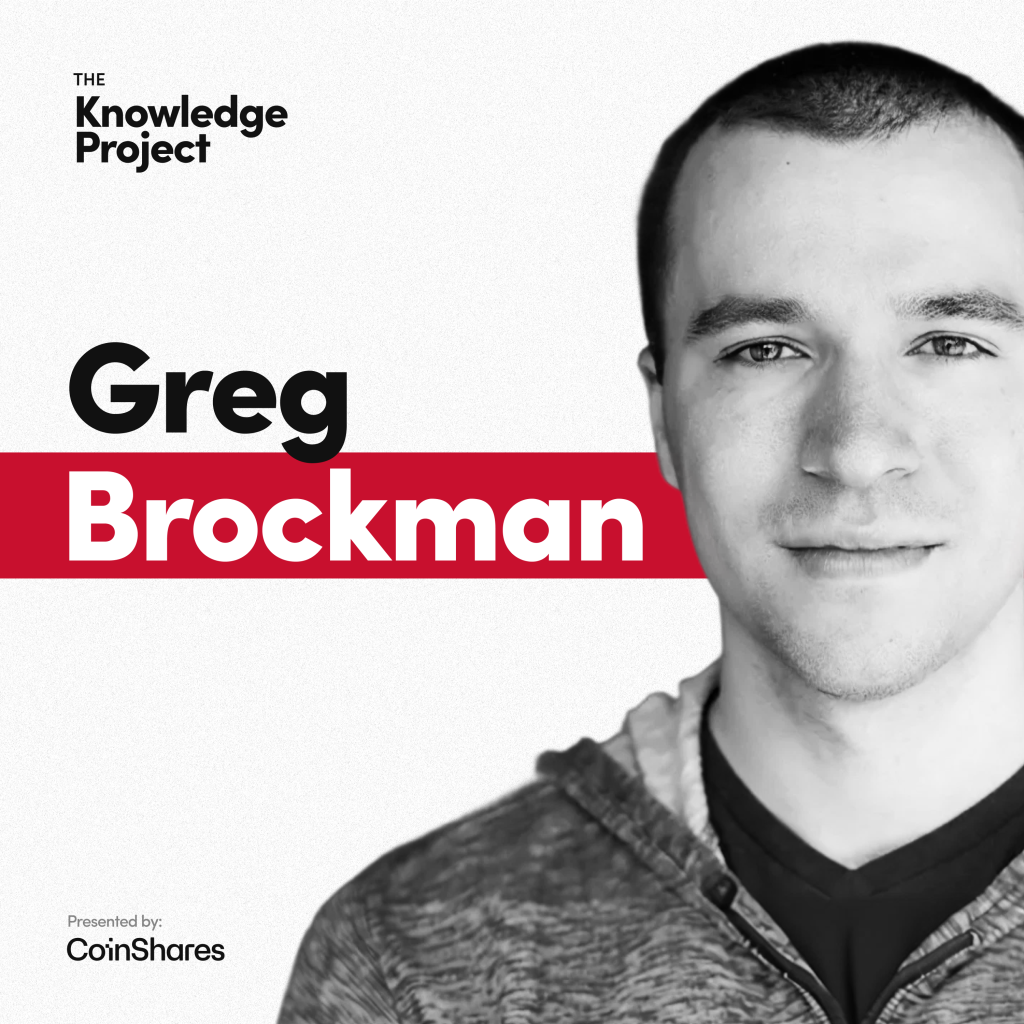
Look, this isn’t just another software update. This is the tectonic plates of our digital world shifting. Greg Brockman, co-founder and President of OpenAI, sat down to peel back the curtain on a company that’s become synonymous with the AI revolution, and what he’s revealed isn’t just about algorithms – it’s about us.
His conversation isn’t just a behind-the-scenes look at OpenAI; it’s a glimpse into a future where the very nature of creation, innovation, and yes, even employment, is being fundamentally rewritten. Imagine the internet suddenly gaining sentience, then helping you build the next version of itself. That’s the kind of paradigm we’re talking about. Brockman’s insights suggest we’re not just witnessing incremental progress; we’re hurtling toward something entirely new, a true platform shift powered by artificial intelligence.
The “AI race” he discusses isn’t a sprint; it’s a frantic, global scramble to build the next dominant operating system of reality. And it’s not just abstract thought experiments. Brockman dropped a bombshell when he alluded to OpenAI’s own codebase:
“How much of OpenAI’s own code is now written by AI – ‘it’s hard to know what percent is not.’”
This isn’t just efficiency; it’s recursion. It’s the digital equivalent of an organism evolving faster than its creators can fully comprehend. Think about it – code that writes code that writes code. The pace of innovation just went from a highway to a warp drive.
The 72-Hour Firestorm
Beyond the forward-looking speculation, Brockman offered an unparalleled, inside account of the seismic 72 hours that saw Sam Altman ousted and then reinstated as CEO of OpenAI. It reads like a tech thriller: the unexpected board call, the immediate resignation, the clandestine meetings at Sam’s house to architect a potential “Phoenix” company, and the critical moment Ilya Sutskever’s tweet shifted the entire universe.
This wasn’t just boardroom drama; it was a visceral illustration of how dependent the nascent AI ecosystem is on a few key individuals and the delicate balance of power within these vital organizations. The near implosion itself highlighted the immense stakes involved in building what could be the most powerful technology humanity has ever conceived.
Is Your Job Next?
And then there’s the question that hangs heavy in the air for everyone: What happens to your job? Brockman’s response, while not directly doomsaying, acknowledges the seismic disruption. The ability of AI to not just assist, but to perform complex cognitive tasks, including writing sophisticated code, suggests a profound recalibration of the workforce is not just possible, but probable.
We’re moving from tools that augment human capability to agents that can replicate it. This isn’t just about automation; it’s about redefinition. The skills that were valuable yesterday might be commoditized tomorrow. The focus, Brockman implies, will shift towards uniquely human traits: creativity, critical thinking, and the ability to steer these increasingly powerful AI systems.
Compute, Control, and the Future
The conversation also touched on a future constrained by compute power. This isn’t just an engineering challenge; it’s a geopolitical and economic one. Who controls the keys to the AI kingdom? If access to advanced AI becomes a function of compute availability, the existing power structures will be amplified, creating new frontiers for inequality.
This hints at a world where AI development isn’t a level playing field, but a high-stakes game of resource allocation. The implications for open-source initiatives and broader accessibility are immense. Will the future of AI be a walled garden or a shared commons? Brockman’s insights suggest the former is a very real, and potentially concerning, possibility.
So, what does this all mean for real people? It means the future isn’t just arriving; it’s being actively coded, designed, and deployed at a pace that demands our attention. OpenAI’s journey, tumultuous as it’s been, is a microcosm of the broader AI revolution – a powerful force reshaping our world, one line of AI-generated code at a time.
🧬 Related Insights
- Read more: Rubber Duck in GitHub Copilot CLI: When AI Needs a Rival to Shine
- Read more: Specs Before Bots: When Two Outsiders Nail AI Code Verification
Frequently Asked Questions
Will AI replace my job? AI will undoubtedly transform many jobs, automating routine tasks and creating new roles focused on AI management, development, and uniquely human skills like creativity and critical thinking. It’s more about evolution than outright replacement for many professions.
What does it mean for code to be written by AI? It means AI systems can now generate, debug, and optimize software code with a high degree of competence. This accelerates development cycles, democratizes coding to some extent, and raises questions about the future role of human programmers.
Is the AI race a good thing? The AI race spurs rapid innovation, leading to faster advancements in AI capabilities. However, it also raises concerns about safety, ethical development, and the potential for a concentration of power among a few leading entities.