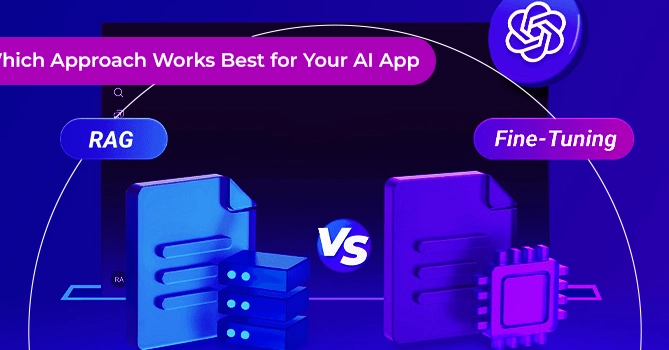
RAG vs Fine-Tuning: Don't Get Fooled by Hype
Companies are throwing AI models at problems like confetti. But how do you actually make them useful? Two main contenders, RAG and fine-tuning, promise the moon. Let's see if they deliver.
The hype around Retrieval-Augmented Generation (RAG) is relentless, but a recent benchmark reveals that for certain complex tasks, traditional vector search might be the wrong tool for the job. It turns out, traversing a knowledge graph can be far more efficient.
When feeding large documents into Large Language Models (LLMs), chunking isn't just a technical step; it's an art form. The efficiency and accuracy of your Retrieval Augmented Generation (RAG) pipeline often hinge on how well you break down that data.
The promise of asking LLMs about your private documents often crumbles under the weight of simple RAG implementation. It's not about the LLM's intelligence, but the retrieval's accuracy.