eBPF Kills User-Space Security Agents [Kernel Ground Truth]
Forget user-space agents. They're dead. eBPF has arrived, attaching directly to the Linux kernel's syscall interface for security observability that attackers can't kill.


NVIDIA engineer Sasha Levin has proposed a 'kill switch' for the Linux kernel, aiming to quickly disable vulnerable functions. While promising a rapid mitigation for exploit risks, it raises serious questions about system stability and the nature of security patching.
After decades at the helm, Andrew Morton is handing over the reins of Linux kernel memory management. The seismic shift raises critical questions about subsystem stability and future maintainership.
A minuscule Python script is all it takes to gain root access on vulnerable Linux systems. This 9-year-old bug, dubbed 'Copy Fail,' highlights the perennial challenge of keeping critical infrastructure secure.
248 patches landed in today's Linux stable kernel updates — a hefty batch fixing everything from USB flaws to networking glitches. But does this volume signal deeper issues, or just the kernel's relentless churn?
Picture this: a single syscall births a fresh mount namespace with your container's rootfs already plugged in. Linux 7.1's FSMOUNT_NAMESPACE kills the old multi-step hassle.
Windows developers, rejoice: Microsoft's WSL2 just synced up with the freshest Linux 6.18 LTS kernel. No more ancient 6.6 lag—new file systems and hardware support mean smoother workflows right in your Start menu.
Picture your server silently failing because 1+1 equaled disaster. Linux's fresh arithmetic overflow API turns kernel math into a fortress, protecting everyday tech from sneaky bugs.
Picture this: your dusty Sega Dreamcast's Visual Memory Unit, that little flash card with games and saves, suddenly readable on a modern Linux rig. VMUFAT, a proposed kernel driver, makes it happen — but is anyone actually asking for it?
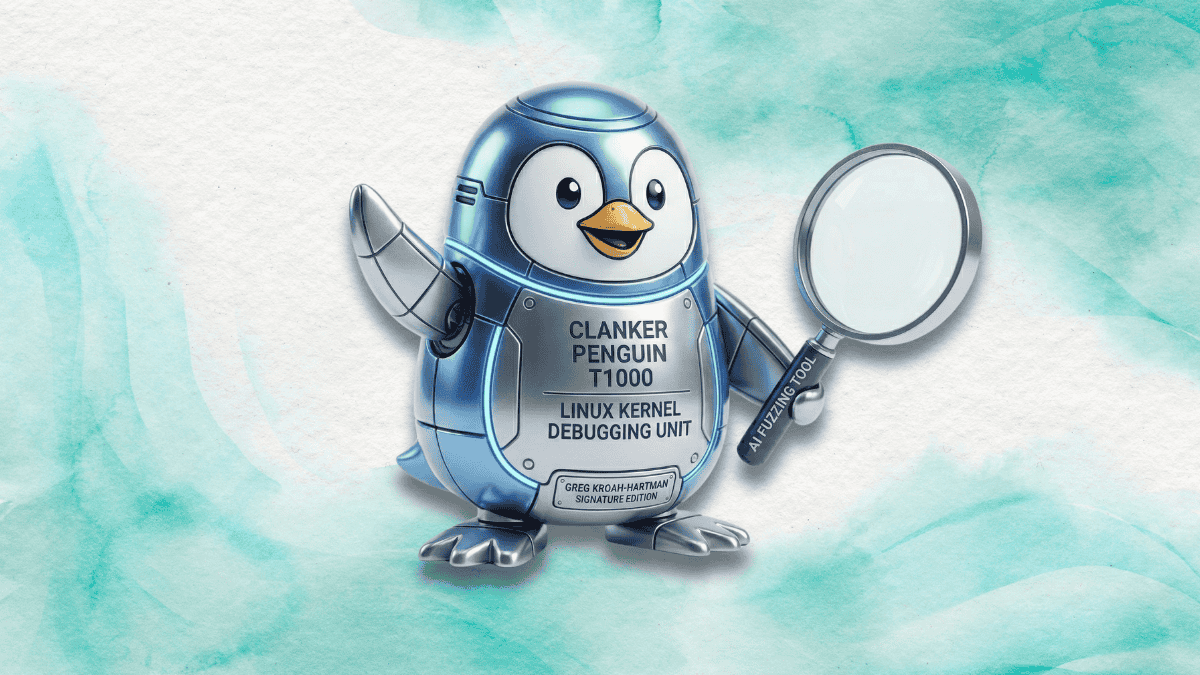
Patches from an AI fuzzer named 'Clanker' are already landing in the Linux kernel. Greg Kroah-Hartman isn't letting bots write code, though—he's making them hunt bugs first.
Song Liu swore writable huge pages were coming soon. Now, the kernel's ditching the read-only version entirely. Classic Linux: promise big, deliver... nothing.
Linux v0.1 from 1991. Still haunting the kernel in 2026. Thomas Gleixner's 'spring cleaning' patch series evicts it with zero mercy.