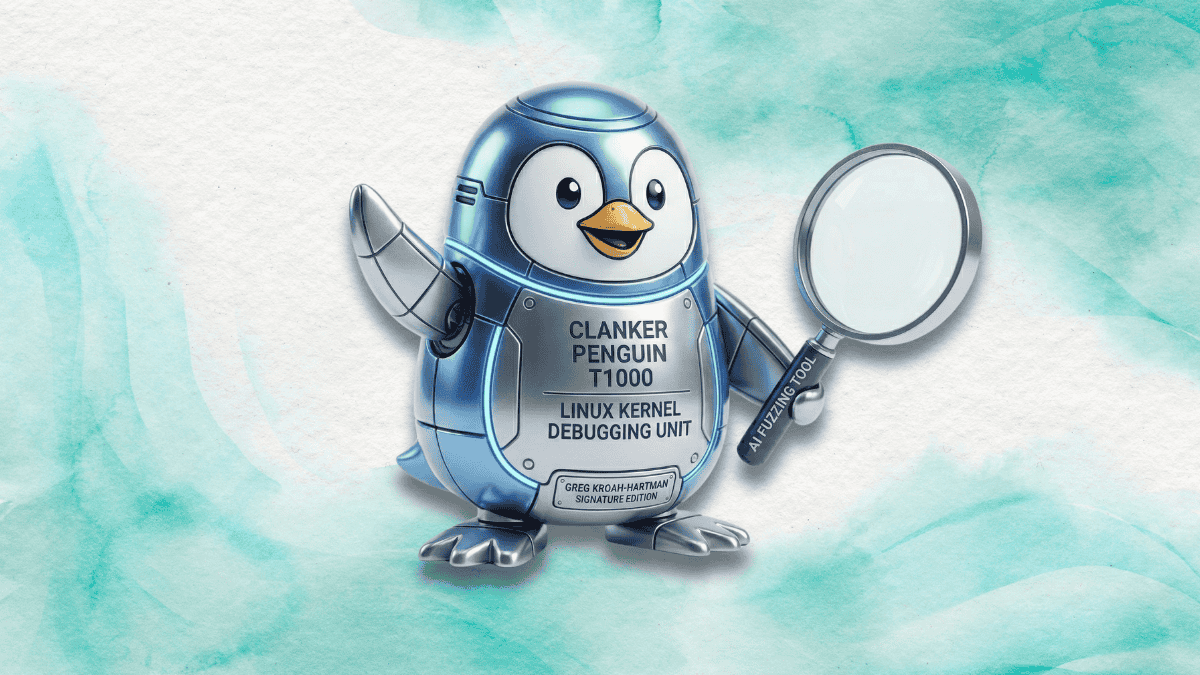
Twenty-plus patches. That’s how many fixes Greg Kroah-Hartman has pulled from his ‘clanker’ branch into the stable Linux kernel tree.
Clanker Linux kernel tooling didn’t write them. It just sniffed out the bugs—like a metal detector beeping over rusty nails in a vast codebase. And here’s the kicker: this isn’t some sci-fi takeover. It’s a grizzled kernel vet wielding AI as a sidekick.
Look, humanoid robots get slapped with ‘clanker’ nicknames because they stomp around like tin cans on legs. Primitive. Noisy. But in the kernel world? GKH repurposed the term for his fuzzing rig. Why? Because it’s banging away at code, crashing it relentlessly with garbage inputs until something breaks. Fuzzing’s old-school black magic—automated chaos to expose memory leaks, buffer overflows, the usual suspects. Critical for a behemoth like Linux, which powers everything from your fridge to Mars rovers.
But GKH’s twist? AI supercharges the chaos. Smarter mutations. Weirder edge cases. No more dumb random bytes; now it’s targeted mayhem.
How a Simple SMB Test Sparked It All
It kicked off with ksmbd. That’s Linux’s SMB server code—the stuff that lets Windows boxes chat with Unix. Easy to spin up in VMs, GKH said. He unleashed clanker. Boom: three bugs popped.
One? Lax validation on EaNameLength in smb2_get_ea(). Untrusted clients could waltz in and trash memory. Two: Missing bounds check on sub-authorities—had to peek at sub_auth[2] without confirming it existed. Three: MechToken leak when SPNEGO decoding flopped post-allocation.
GKH didn’t mess around. He filed the patches but slapped a warning label:
“please don’t trust them at all and verify that I’m not just making this all up before accepting them.”
Dry humor from the man who’s touched every stable kernel release for years. Reviewers chuckled, verified, merged. Smart move.
Clanker didn’t stop. Patches piled up: USB gadget flaws, HID quirks, WiFi driver oopses, LoongArch architecture tweaks, networking gremlins. Subsystems galore. This branch is a bug-hunting machine.
Who the Hell Is GKH, Anyway?
If you’re not deep in kernel lore, Greg Kroah-Hartman is Linux’s unsung enforcer. Stable maintainer. Second to Linus Torvalds. Every LTS kernel—servers, Android phones, IoT gadgets—flows through him.
He penned Linux Kernel in a Nutshell back in ‘06. Free online. Still the go-to for config hell and build rituals. (Overdue for edition two, Greg. We’re begging.) Dude’s influence? Immense. He’s the gatekeeper keeping regressions at bay.
Now he’s dipping toes into AI waters. Quietly. No fanfare. Just results.
Linus noticed.
At Open Source Summit Japan last year, Torvalds dropped this: the next Maintainer Summit would tackle “expanding our tooling and our policies when it comes to using AI for tooling.” He ran his own AI test—reviewed a dodgy merge. Tool backed his veto and spotted extras.
“I am much less interested in AI for writing code” Linus said, eyes on maintenance, reviews, checks.
Preach.
Why Does Clanker Matter for Kernel Hackers?
Fuzzing isn’t new. Syzkaller crushed it a decade ago, birthing thousands of fixes. But AI? That’s the turbo. Traditional fuzzers chuck random junk. AI learns patterns, crafts adversarial inputs—like a hacker on steroids.
GKH’s setup? Human-in-the-loop gold standard. AI flags. He inspects, fixes, owns it. Mirrors LLVM’s policy: review everything, bot or not. No blind merges.
Corporate hype screams ‘AI codes your future!’ Bull. This proves AI shines in drudgery—scanning billions of paths humans skip. My hot take? Historical parallel to static analysis boom in the 2000s. Coverity, Sparse—they culled low-hanging fruit. Clanker does that on fuzz steroids. Prediction: by 2026, AI fuzzers catch 40% more kernel bugs. But without vets like GKH? Disaster.
Critics whine: ‘Slippery slope to bot overlords.’ Please. GKH’s caveat screams caution. He’s not outsourcing brains. He’s augmenting them.
And the PR spin from AI cheerleaders? Yawn. They peddle code-gen miracles while kernel folks grind real wins. Clanker’s no revolution. It’s evolution—pragmatic, skeptical. Exactly Open Source Beat’s vibe.
Subsystems hit so far paint a picture. USB: race conditions in gadget mode. HID: input validation gaps letting malformed reports crash handlers. Networking: off-by-one in packet parsing. LoongArch: arch-specific alignment bugs. Wide net.
What if clanker scales? Imagine fuzzing the entire tree nightly. GKH’s tree hints at it. Branches merge steadily. Stable-6.10-rc already nibbles.
Risks? False positives could swamp queues. AI hallucinations in test cases. But GKH’s filter—decades of gut—handles it. Linus nods approval. That’s endorsement enough.
Is AI Fuzzing Ready to Own Kernel Testing?
Short answer: Almost. With humans steering.
We’ve seen AI flops—GitHub Copilot suggesting vulns, anyone? But fuzzing’s narrower. Input gen, crash repro. Less creative destruction.
Unique angle: Remember AFL fuzzing’s 2013 rise? Grey-box magic halved exploit dev time. Clanker? AI grey-box on crack. Expect syzkaller forks with LLMs soon. OSS projects will mandate it.
Downsides. Power hungry—GPUs for inference? Kernel CI budgets groan. Privacy: proprietary AI backends? GKH’s opaque, but open source ethos demands transparency. Push for local models.
Still, upside crushes. Linux’s 30M+ lines? Manual audit impossible. AI fuzzing plugs holes proactively. Security teams cheer.
GKH’s playing long game. No splashy blog. Just merges. That’s kernel culture—deeds over words.
🧬 Related Insights
- Read more: AI Finally Tames Multi-Cloud Cost Chaos
- Read more: Reclaiming the Wheel: How I Code with AI Without Handing Over the Keys
Frequently Asked Questions
What is clanker in Linux kernel?
Clanker is Greg Kroah-Hartman’s branch running AI-assisted fuzzing to find bugs in kernel code, leading to real patches in stable releases.
Is AI writing Linux kernel code now?
No—AI only fuzzes for bugs; humans like GKH review and write fixes. Linus prefers it for tooling, not code gen.
Will clanker replace traditional fuzzers like syzkaller?
Unlikely soon—it’s complementary, supercharging with AI smarts while keeping human oversight.