Uber's Go Monorepo Nearly Killed Productivity – And How They Barely Saved It
Picture this: one engineer's commit tanks 3,000 Uber services, delaying your ride across the city. That's the monorepo madness Uber just survived – barely.

Picture this: your code's ready, but deployment drags on for nearly an hour. We fixed it—60% faster on GCP, unleashing engineering velocity like never before.
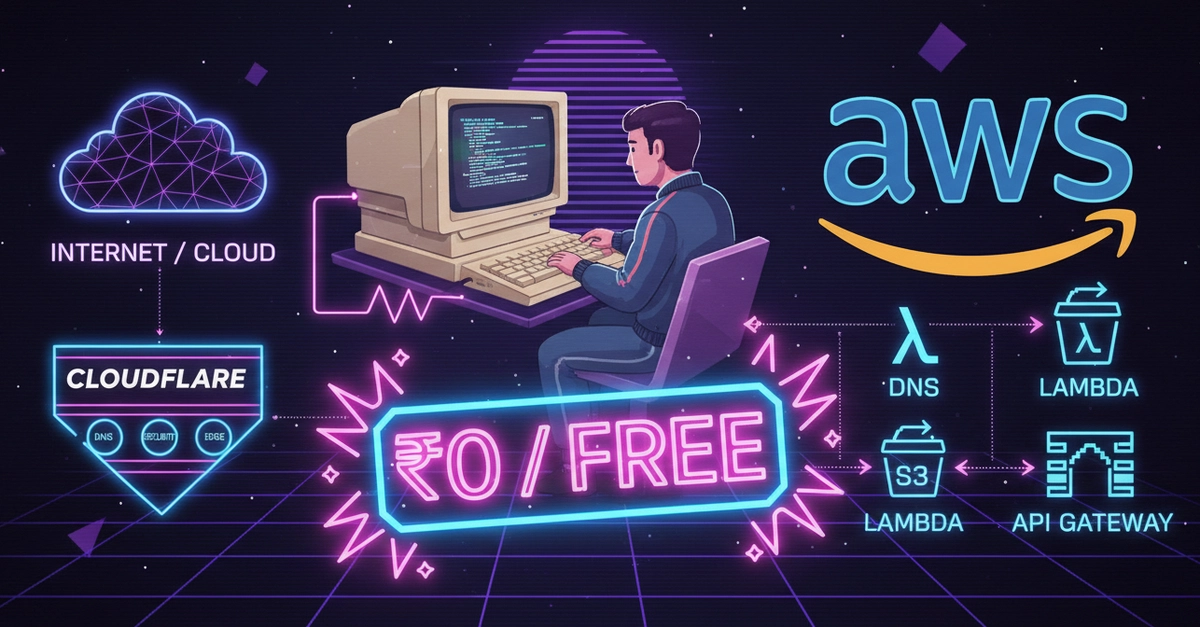
A developer built a full production infrastructure—with HTTPS, custom domain, and scalable compute—for exactly ₹0. Here's the architecture that worked, and the gotchas that almost broke it.
Twenty years of covering tech taught me one thing: engineers love complex solutions to simple problems. But one team's gRPC meltdowns reveal something uncomfortable—sometimes the answer is to reject requests faster, not serve them slower.
AI agents are 60% more productive when you stop micromanaging them. But letting them run unsupervised on your machine is terrifying—unless you give them a true sandbox.
NVIDIA just dropped support for its beefy new DGX Station in Docker Model Runner. Translation: you can now run frontier AI models locally without touching a cloud API—and actually get your work done without learning new tools.
You've been patching broken E2E tests for months. Your team's confidence is shot. The problem isn't the tests themselves—it's that you're treating symptoms instead of disease.
A Docker architect just proved you don't need expensive cloud AI to automate repetitive tasks. He built a local news roundup bot that fetches, analyzes, and summarizes tech stories—all without burning through your Claude credits.
For years, millions of enterprise developers couldn't run Docker Desktop because their corporate environments were locked down tighter than a bank vault. Docker Offload changes that—and it's actually not vaporware.
KubeVirt 1.8 just dropped with the architectural spine it always needed. For organizations drowning in VMware licensing bills, this is the moment the escape hatch becomes a highway.
AI agents can generate code faster than teams can review it. The real problem? We're not letting them validate it against actual infrastructure—and that's creating a dangerous bottleneck.
The fashion industry is experiencing a technical revolution. Designers are writing garment code. Factories are becoming smart nodes. And $500 billion in annual waste is about to get very inefficient.