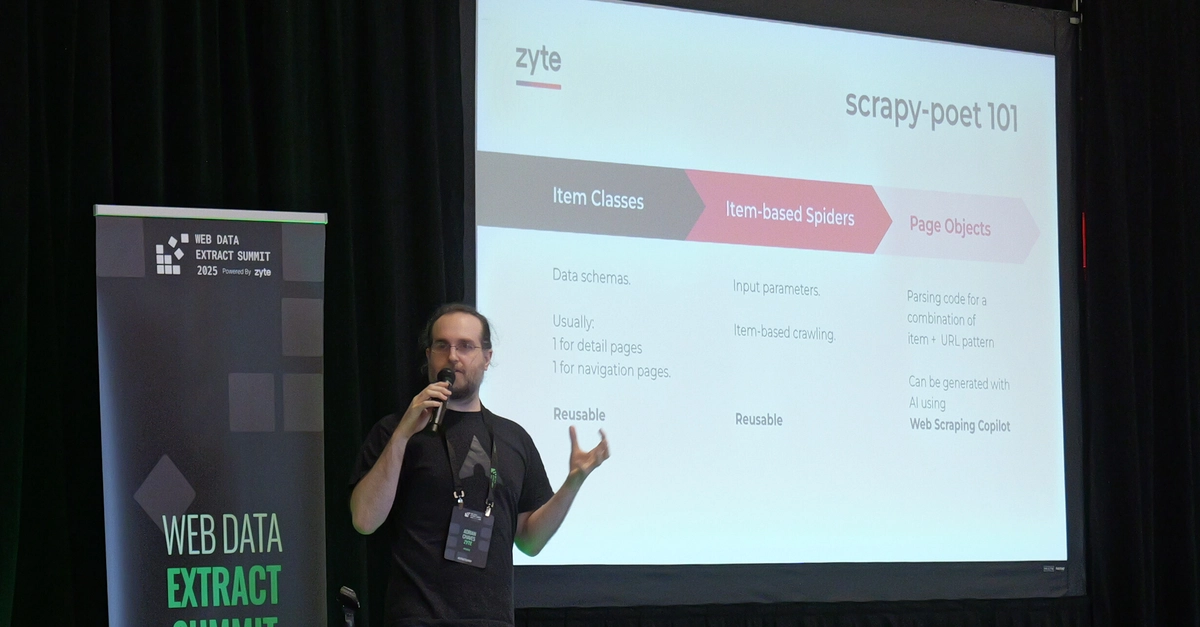
Adrian Chaves hits me with it right off the bat—‘The hard part of scraping in 2026 isn’t writing code. It’s reading pages.’
Boom. We’re mid-chat, coffee steaming, and this Scrapy maintainer—who’s also at Zyte— just flipped my whole view on AI-generated scrapers upside down.
Zoom out a sec. Scrapy? That battle-tested Python framework for web scraping, the one devs swear by for clawing data from the web’s underbelly. Zyte’s Web Scraping Copilot? Their shiny new LLM tool that generates Scrapy spiders on demand. I’ve been obsessed: does this kill the need for scraper wizards, or what?
Adrian’s not buying the hype wholesale. And here’s my hot take, one you won’t find in Zyte’s blog post: this feels like the early days of JavaScript in browsers—messy, powerful, but frameworks like Scrapy are the Netscape that survives because they’re built sturdy for humans and machines.
Why Scrapy’s Human Roots Make It AI-Perfect
Think fireflies in a jar. LLMs buzz around, lighting up code snippets—vivid, quick, gone in a flash. But Scrapy? It’s the jar. Structured. Modular. Built so you (or an AI) can tweak one part without shattering the whole.
Adrian nails it:
On vibe coding: Adrian has thoughts about developers treating scraper generation as a black box, and why Scrapy’s design philosophy matters more, not less, when an LLM is writing the code.
Don’t black-box it, he says. Scrapy’s signals, items, pipelines—they force good habits. AI follows those rails effortlessly. Result? Scrapers that don’t crumble when sites tweak their HTML.
Short para. Magic.
Now sprawl with me: imagine you’re prompting Claude or Opus—‘Scrape product prices from this e-comm site’—and out pops a spider. Beautiful. But tweak the selector? AI hallucinates. Scrapy’s middleware layer? That’s your safety net, human-designed to handle anti-bot walls, rotating proxies, all the web’s dirty tricks. LLMs amplify it, don’t replace it.
Can AI-Generated Scrapers Handle Real-World Chaos?
Here’s the thing—AI shines on the boilerplate. Authentication flows? Check. Pagination loops? Nailed. Even custom parsers for wonky JSON-in-divs.
But pages. Oh, the pages.
Sites morph daily. JavaScript renders late. CAPTCHAs pop like whack-a-mole. Adrian’s blunt: LLMs suck at ‘reading’ dynamic content. They predict patterns from training data, sure—but live? Nope. You’re still eyeballing network tabs, decoding obfuscated JS.
And anti-bot tech? Cloudflare, PerimeterX—they evolve faster than models retrain. AI helps generate evasion code, but the strategy? Human gut.
Vivid picture: it’s like giving a kid a drone to map a storm—flies great in clear skies, crashes in turbulence.
Where AI Actually Crushes It (And Where It Flops)
Let’s list ‘em quick, ‘cause pace matters.
AI wins:
-
Prototyping spiders in minutes, not hours.
-
Handling repetitive sites (news feeds, listings).
-
Integrating with extraction APIs like Zyte’s.
Flops:
-
Edge cases. Infinite scrolls with lazy-load hacks.
-
Legal/compliance parsing (robots.txt? Terms? AI ignores ethics.)
-
Debugging. Logs scream, but why?
Adrian pushes back on ‘vibe coding’—tossing prompts like dice. Scrapy’s philosophy demands you think like the spider. AI learns that, gets better.
Prediction time, my unique spin: by 2028, Scrapy forks will ship with built-in LLM hooks, turning it into the OS for web agents. Like Linux for servers—ubiquitous, extensible. Zyte’s ahead, but open source wins long-term.
But wait—corporate spin alert. Zyte’s Copilot promo screams ‘easy mode unlocked!’ Adrian tempers it: yeah, easier, but don’t ditch your skills. The web’s a jungle; AI’s your machete, not the pathfinder.
Look, I’ve scraped my share—hacked together spiders that barfed on AMP pages. AI? It’s transformed my flow. Prompt a base, tweak manually. Walls? Still hit ‘em on fingerprinting.
What about you? Comments below—what’s your AI scraping story?
Why Does Scrapy Beat Hype Tools for AI Scrapers?
Simple. Extensibility. Most LLM scrapers? One-shot wonders. Scrapy scales to clusters, exports to ItemLoaders, plugs into Scrapyd for deploys.
AI agents need that backbone. Claude Sonnet spits code? Feed it to Scrapy, iterate. Opus for Opus—wait, Zyte’s Opus model? Tailored for this, but Scrapy’s the frame.
Dense dive: consider a scraper for stock tickers. JS-heavy, websocket feeds. AI generates the spider—great. But retries on 429s? Custom downloader middleware. Rate limits per IP? Built-in. Human foresight baked in.
One sentence: Scrapy’s future-proof.
Then explode: and get this—Adrian argues good design meets AI halfway. Frameworks for humans are best for agents because they encode best practices. No brittle regex soups from raw GPT. Scrapy’s items enforce schemas, preventing data rot downstream.
The Real Bottleneck in 2026 Scraping
Not code. Pages.
LLMs ‘read’ via snapshots. Web’s live—SPAs, shadow DOM, infinite personalization. AI guesses wrong.
Fix? Hybrid: AI codes, humans (or better vision models) interpret.
Wonder here: what if Scrapy + multimodal LLMs? Screenshots to selectors. Game on.
Wrapping the energy—AI’s the shift, like HTTP to AJAX. Scrapy’s adapting, thriving. Jump in now.
**
🧬 Related Insights
- Read more: Why Chasing the ‘Best’ AI Chatbot Is a Fool’s Errand
- Read more: Protocol 418: AI’s Steaming Rebellion Against Your To-Do List
Frequently Asked Questions**
What are AI-generated scrapers?
Tools like Zyte’s Web Scraping Copilot where LLMs write web scraping code, often using frameworks like Scrapy, to extract data fast.
Does AI replace Scrapy developers?
No—AI handles code, but humans tackle page understanding, anti-bot evasion, and debugging.
Is Scrapy good for AI scraping?
Yes—its modular design makes it ideal for AI-generated code, enforcing reliability.