Everyone expected AI to either revolutionize development or render it obsolete overnight. The reality, as often happens, is far more nuanced and, frankly, more useful. We’re not talking about AI conjuring entire applications from thin air. Instead, the real, immediate impact is in tackling one of the most persistent and expensive headaches in enterprise IT: legacy systems.
For decades, the sheer inscrutability of fifteen-year-old Java monoliths or, dare I say, COBOL systems humming along since the Reagan administration, has been the primary bottleneck. Business logic isn’t in documentation; it’s etched into the very fabric of code penned by developers long departed. The myth of comprehensive documentation? Usually just that—a myth, or worse, actively misleading.
And here’s the kicker: these aren’t fringe systems. They’re mission-critical. This is where AI tooling is quietly, but profoundly, starting to deliver value. Not by miraculously rewriting everything (a fool’s errand), but by making these arcane systems legible enough for incremental modernization. This isn’t just about making old code look new; it’s about finally understanding what the devil it actually does.
Why has modernizing legacy systems stalled for so long? Forget technical complexity. The real roadblock has always been a fundamental lack of knowledge. We’re staring down thousands, if not millions, of lines of procedural code, patched and re-patched over decades, with embedded business rules and zero test coverage. The brilliant mind who understood the complex discount calculation logic? Likely retired in 2012, taking that tribal knowledge with them.
Traditionally, bridging this knowledge gap meant painstaking, soul-crushing work: reverse-engineering code line by line, tracking down aging subject matter experts (if they exist), running the system with test data and hoping to observe meaningful outputs, and then painstakingly documenting it all manually. This process could drag on for months. Months of mind-numbing, error-prone labor nobody relishes.
AI’s Role as a ‘Legibility Engine’
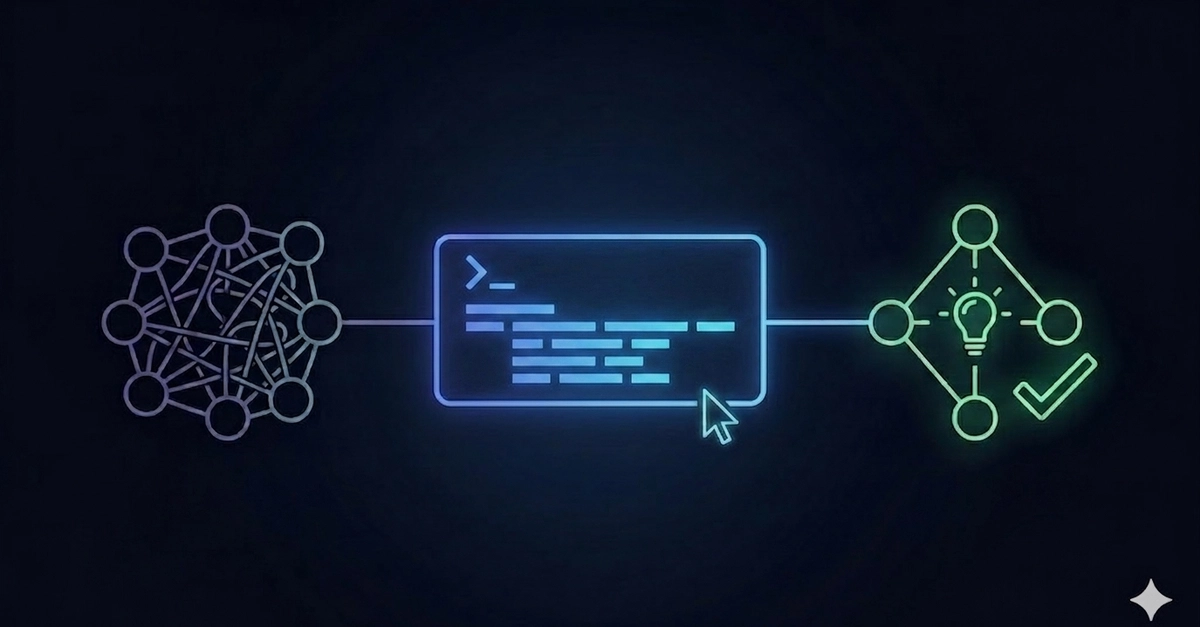
Modern LLMs, from GPT-4 to Claude and even specialized models, are fundamentally changing this equation. They’re not code generators in the grand sense, but they are becoming incredibly adept at parsing and interpreting. They can:
- Generate plain-English summaries of what obscure functions actually do.
- Trace complex data flows across disparate modules.
- Identify hidden dependencies and unintended side effects.
- Suggest which components might be candidates for safe decoupling.
Consider a scenario: a 500-line stored procedure, cobbled together in 2005, calculating customer discounts. You feed this beast into an LLM with a prompt like: “Summarise what this procedure does, list all business rules, and identify external dependencies.”
The output, while imperfect and requiring human validation, provides an invaluable starting point. It’s a leap from hours of manual analysis to minutes of intelligent summarization. This immediate legibility allows teams to:
- Validate the AI-generated summary with existing domain experts.
- Use this AI-generated documentation as the blueprint for a new replacement service.
- Quickly identify edge cases that demand immediate testing.
This pragmatic approach is already gaining traction within UK enterprises, particularly in financial services and the public sector, where documenting these vast, legacy codebases is proceeding at a pace previously unimaginable.
The Strangler Fig, Now with AI Assistance
The established best practice for migrating legacy systems—the strangler-fig pattern—remains the gold standard. It involves building new services around the old system, incrementally redirecting traffic until the legacy code can finally be retired. AI tools act as a powerful co-pilot in this endeavor:
- Identifying Bounded Contexts: Pinpointing which discrete chunks of the monolith can be safely extracted and refactored into independent services.
- Generating Interface Contracts: Defining the precise inputs and outputs a component is expected to handle, crucial for inter-service communication.
- Scaffolding Replacement Services: Creating boilerplate code for new microservices based on the analyzed behavior of their legacy counterparts.
- Comparing Outputs: Running old and new implementations in parallel, flagging any discrepancies in their behavior.
Crucially, we’re not talking about handing the reins over to AI unsupervised. The goal is to accelerate the tedious, time-consuming aspects of modernization, freeing up human engineers to focus on the truly difficult decisions: architectural trade-offs, risk assessment, and strategic planning.
Let’s be crystal clear: LLMs do not understand your business logic. They are sophisticated pattern-matching engines. They can and will hallucinate, confidently presenting plausible-sounding nonsense. This is not a technology to be blindly trusted.
So, what should you avoid using AI for in this context?
- Final Architectural Decisions: These require human ownership and deep domain expertise.
- Validating Business-Critical Logic: Always, always verify with human domain experts.
- Security-Sensitive Code: Treat any AI-generated code in this domain as untrusted input.
- Anything Without Thorough Code Review: Hallucinations are a real and present danger.
AI’s true power here lies in its role as a documentation accelerator and a sophisticated mapping tool. It is emphatically not a replacement for engineering judgment or critical thinking.
For organizations staring down the barrel of a legacy modernization project, a clear strategy is paramount:
- Begin with Documentation, Not Replacement: Employ AI to map the existing landscape before any invasive code changes are made.
- Validate Everything: Treat AI output as a comprehensive first draft, never as gospel.
- Focus on Knowledge Capture: The real win is making implicit, tribal knowledge explicit and accessible.
- Delegate the Tedium: Use AI to automate boring, repetitive analysis, thereby freeing your team to tackle genuinely complex problems.
Legacy systems are not disappearing. They are a persistent reality. However, with the judicious application of the right AI tooling and a disciplined, pragmatic approach, these monolithic beasts can become genuinely understandable. And in the world of legacy modernization, understanding is, quite literally, half the battle won.
For organizations exploring how AI can truly bolster their modernization efforts, engaging with agencies specializing in AI automation and software development can provide the structure and clarity needed to navigate these complex programs, cutting through the inevitable hype.