For everyday folks scraping by in storm-prone towns, this KubeCon story hits different. A high schooler just demoed hurricane predictions using free open-source tools — stuff like Kubernetes and vLLM — that could slash costs for better warnings. No fancy degrees needed. Just grit and code.
Look, I’ve covered these confabs for two decades, from the early Kubernetes days when it was still a Google side project. And here’s the kid, barely old enough to drive, rubbing shoulders with CNCF bigwigs in Amsterdam. KubeCon + CloudNativeCon Europe 2026 drew 13,000, single-digit speaker acceptance. Yet this junior-year project on efficient inference for hurricane data sneaks in.
It’s a gut check. While VCs chase AGI unicorns, real problems — like predicting Path-like monsters — get solved by teens in classrooms. Who knew?
Can a High Schooler Actually Hack It at KubeCon?
Short answer: Hell yes. But don’t buy the feel-good spin wholesale.
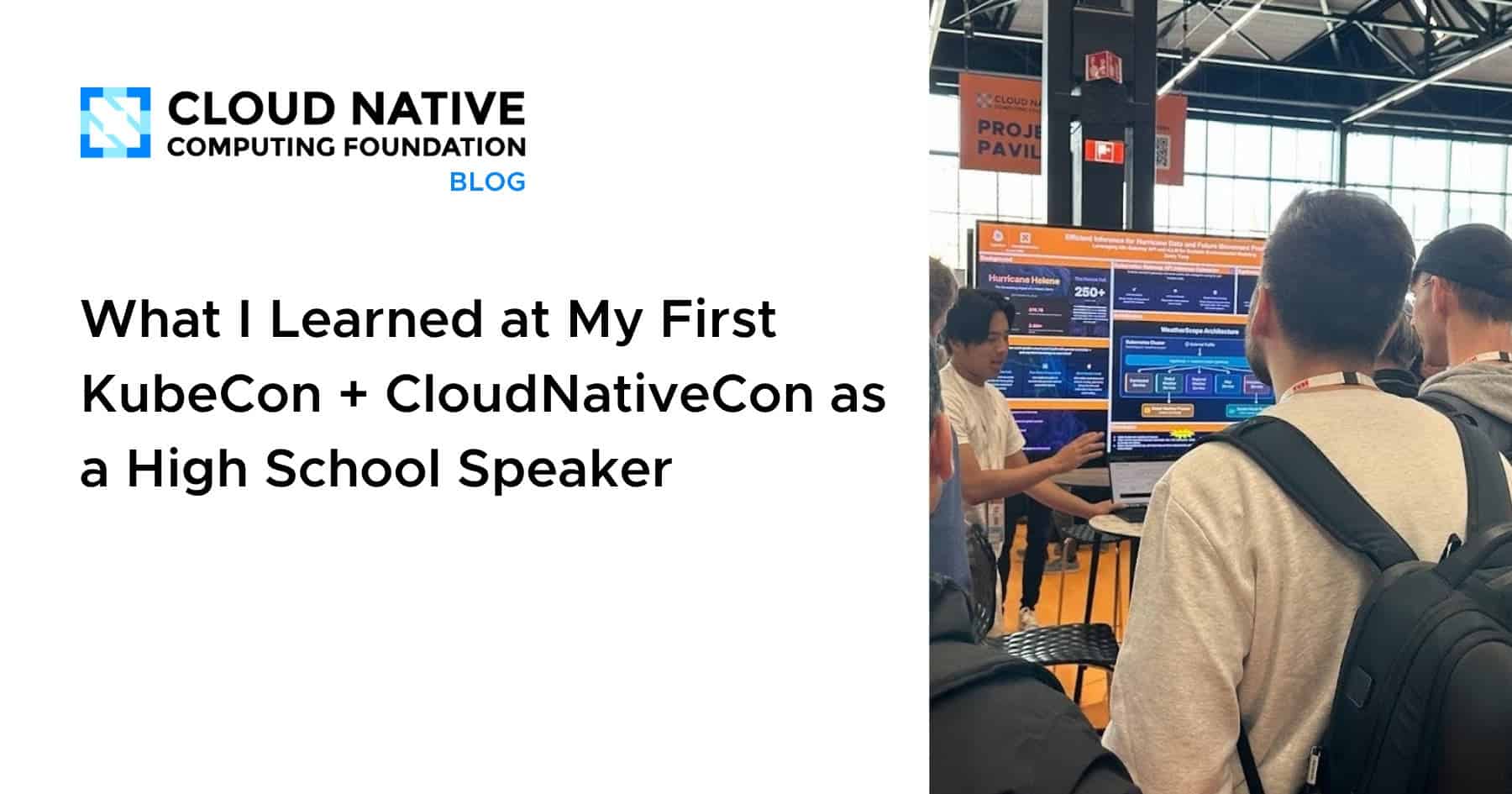
The kid arrives at RAI, overwhelmed by the sprawl. Packed keynotes. Poster sessions buzzing. Their setup? A mashup of modified CFD models, FourCastNet, kgateway for routing — all orchestrated on Kubernetes. Title: “Efficient Inference for Hurricane Data and Future Movement Prediction.” Sounds wonky? It’s about making AI weather forecasts cheaper, faster, for anyone with a laptop.
Crowds formed. Pros grilled them. One even from their hometown. Nervous demo on a laptop, waves of Q&A. That’s the magic — not the booths, but raw exchange.
“I wasn’t sure if anyone would even stop by. But pretty quickly, a crowd started forming, way more people than I expected.”
Cynic that I am, I’ve seen speakers flop. Not this one. They wandered sessions too: gliders over Himalayas on cloud native stacks (low-emission wins), bike shop analogies for CNCF maturity. Practical. No buzzword bingo.
But wait — solution showcases? Corporate circus. Booths hawking enterprise Kubernetes, games for eyeballs, swag piles. Kid snagged a tee, speaker gift, stroopwafels. Luggage limits real talk.
People spotting the badge: “You’re a speaker?!” Instant project pitch. Happens every con. Badge psychology.
Why Does KubeCon Matter for Regular Devs in 2026?
Skip the PR gloss. This ain’t 2015’s Kubernetes hype peak. Now it’s mature, battle-tested — but corporates feast on certified distributions while open source foot soldiers grind.
Unique angle you won’t read elsewhere: Echoes the ’90s Linux cons. Back then, college dropouts like Linus acolytes crashed parties, birthing empires. Today? This kid’s poster foreshadows Gen Z upending the old guard. Prediction: By 2030, half CNCF maintainers under 25, forcing Big Tech to adapt or get forked.
Community pavilion? Gold. Chats with maintainers — motivations raw: itch-scratching, not stock options. Kid left itching to contribute more. That’s the unspun truth.
Sessions wandered from AI inference to sustainable tech. Bicycle on stage explain project lifecycles — genius. No jargon walls.
And the scale? Crazy. Companies desperate to stand out amid commoditized k8s. Who’s profiting? Not you, home gamer — it’s Red Hat, SUSE, the distro kings charging support bucks.
Yet for real people: Open tools mean hurricane models anyone can fork. Classrooms to clinics. No PhD gatekeeping.
Post-con Amsterdam jaunt — Keukenhof blooms, Dutch fries. Recharging amid tulips.
Final vibe? Energized community push. AI, sustainability colliding. Student proving barriers crumbling.
But here’s my skewer: Linux Foundation’s CNCF arm? Noble, sure. Yet sponsors’ logos everywhere scream ‘enterprise upsell.’ Kid’s purity cuts through — open source thrives despite the suits.
Wandered booths, snagged essentials. Limited swag haul — smart. Pros waste hours on branded junk.
One aside: Fresh stroopwafels? Event win. Better than SF’s overpriced kale.
Deeper dive — project evolution. Junior year class sparked CFD tweaks. Bloomed into k8s-orchestrated beast. Inference-aware routing? Smart for edge cases like storm sims.
Crowd reasons: Similar models, teen curiosity, local ties. Humanizes the horde.
Glider talk? Cloud native enabling stratospheric flights, emissions slashed. Open source in wilds.
Bike analogy stuck — maturity stages pedaled out. Abstract to actionable.
Maintainer chats inspired. Beyond code: Why contribute? Passion, not paychecks (mostly).
Scale hit hard. 13k souls, competitive slots. Kid’s win? Merit, not connections.
The Corporate Swag Trap at Big Cons
Don’t get suckered. Booths = sales funnels. Games? Distractions. Swag? Bait for your data.
Kid played it cool — tee, toys, done. Pros hoard like dragons. Waste.
Badge reactions? Everywhere. “Speaker?” Spill project. Networking gold, zero schmooze.
For you, desk-bound dev: KubeCon signals open source’s health. Teens in? Vibrant. Corporates crowding? Watch your wallet.
Historical parallel: Early OSCONs, hobbyists vs. Sun Microsystems. Guess who won long-term? Community.
Bold call: This kid-type influx disrupts. Enterprises pivot to talent hunts, or ossify.
Amsterdam touring? Smart decompress. Gardens, fries — balance.
“KubeCon + CloudNativeCon Europe 2026 felt like more than just a conference; it felt like a community.”
Nailed it. Collaboration fuels it. Even skeptical vets nod.
Energized exit. Open source power via collab. Students contributing globally.
My take: Hype fades, but moments like this endure. Go build.
🧬 Related Insights
- Read more: Self-Hosting AI in 2026: 55% Cheaper, 18ms Latency – Or Just NVIDIA’s Goldmine?
- Read more: Slack AI Agents: The 200-Hour Bill Most Teams Ignore
Frequently Asked Questions
What is KubeCon and who attends?
KubeCon + CloudNativeCon is CNCF’s mega-event for cloud native tech like Kubernetes. 13k devs, ops folks, companies — from newbies to maintainers.
How can a beginner speak at KubeCon?
Build something real, like a poster project. Submit early — single-digit acceptance. Teens prove: Merit trumps years.
Is open source at KubeCon still relevant for weather prediction?
Absolutely. Tools like vLLM, FourCastNet on k8s make advanced models accessible, cutting costs for hurricane forecasts.