Forget the hype about one AI model doing everything. That’s yesterday’s news. The real revolution? Teams of AIs. Actual, functioning AI teams are here, and they’re not just assisting us anymore. They’re actively collaborating, deconstructing enormous goals, and executing multi-step workflows with barely a nudge. The conversation has irrevocably shifted from ‘What can one AI do?’ to ‘What can a coordinated network of AI agents accomplish together?’ And that shift changes everything.
What exactly is this ‘multi-agent system’ (MAS)? Think of it as an AI architecture where multiple agents — each with its own specialized skills, memory, and toolbelt — band together. They’re not one superstar employee; they’re a well-oiled team. Each member brings something unique to the table.
Picture this: one agent scours the web for data. Another crafts a report from that data. A third agent plays devil’s advocate, scrutinizing the draft for logical holes. The last one polishes it for publication. Individually, each agent might seem unremarkable. But together? They churn out a polished, high-quality deliverable. All with minimal human input. That’s the power of coordination.
And how do they coordinate? Several patterns emerge. They can work sequentially, passing the baton. Or in parallel, attacking different facets of a problem simultaneously. Then there’s the hierarchical approach, where a lead agent delegates tasks to its subordinates. The best pattern? It depends entirely on the job.
Why does this matter? Because single-agent architectures have limits. Big ones. A single large language model, no matter how impressive, struggles. Context window limitations. Reasoning that gets fuzzy on long chains of thought. The inability to truly multitask. Ask it to research a competitor, strategize, write a report, and format it as a slide deck? You’ll see the cracks appear.
There’s also a glaring reliability issue. Pack too many steps into one agent, and a tiny error early on can silently sabotage the entire operation. Multi-agent designs offer a lifeline. Each stage can be independently validated. Errors are easier to spot, easier to fix, before they snowball.
But the kicker? Single agents can’t do parallel work. Five independent subtasks? One agent tackles them one by one. A smart multi-agent system farms them out simultaneously. Completion times? Slashed. For knowledge-heavy tasks, this isn’t just faster; it’s a fundamental redefinition of what’s achievable within a practical timeframe.
The Orchestrator-Worker Model: Project Management AI
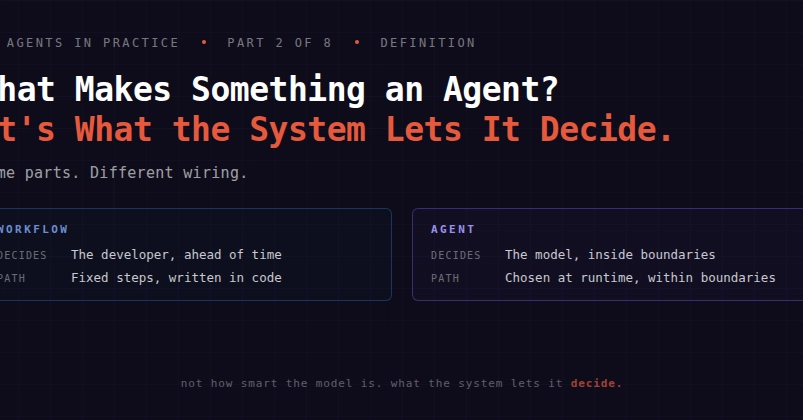
Most MAS implementations follow common patterns. The orchestrator-worker model is a prime example. A central ‘planner’ agent takes a high-level goal, slices it into manageable tasks, and dispatches them to specialized worker agents. The orchestrator keeps tabs on progress, handles hiccups, and compiles the final output. It’s like a human project manager, but for AI.
Here’s a taste of what that looks like in code. Keep in mind, this is a skeletal example.
from agents import ResearchAgent, WriterAgent, ReviewAgent
def run_pipeline(topic: str) -> str:
    # Orchestrator delegates to specialized agents in sequence
    research_output = ResearchAgent().run(topic)
    draft = WriterAgent().run(research_output)
    final = ReviewAgent().run(draft)
    return final
result = run_pipeline("impact of multi-agent AI on enterprise productivity")
print(result)
The core principle is simple: the orchestrator dictates the flow, and each agent sticks to its knitting. Real-world systems add error handling, retry mechanisms, and state management – but the fundamental idea of composition remains the same.
Peer-to-Peer: The Dynamic Network
Not all MAS need a central boss. Peer-to-peer designs rely on agents communicating directly via message passing. One agent’s output sparks another’s action, creating a reactive network. This is perfect for dynamic, unpredictable workflows where the path from input to output can’t be neatly mapped out in advance. The price of this flexibility? Complexity. Debugging these systems is a nightmare compared to their organized orchestrator cousins, as there’s no single source of truth for global state. Building production-ready peer-to-peer MAS is a significant engineering challenge.
Is This Just More AI Hype?
It’s easy to dismiss new AI paradigms as vaporware. But multi-agent systems aren’t just theoretical. Companies are already building tools that use this architecture. They’re not just improving existing workflows; they’re creating entirely new categories of productivity. Imagine an AI that can independently manage your calendar, book travel, and prepare briefing documents for every meeting, all without you lifting a finger. That’s not science fiction anymore. It’s the logical next step.
This isn’t about replacing human workers wholesale. It’s about augmenting them. It’s about offloading the tedious, multi-step tasks that bog down human creativity. Think of it as giving every knowledge worker a virtual team of assistants. The potential for individual and organizational efficiency is staggering. The old way of thinking about AI — as a singular tool — is becoming obsolete.
What’s the Open Source Angle?
The underlying principles of multi-agent systems are inherently open. The concept of modularity, of composable agents with defined interfaces, aligns perfectly with the open-source ethos. Expect to see more open-source frameworks emerge for building and managing these complex AI orchestrations. This will democratize access to powerful AI collaboration capabilities, preventing them from becoming the exclusive domain of tech giants. Open source is poised to be the engine driving the practical adoption of multi-agent systems, fostering innovation through shared development and community contributions.
🧬 Related Insights
- Read more: GitHub Copilot App: IDEs No Longer Enough
- Read more: Laravel Performance: 6 Real-World Lessons for Developers
Frequently Asked Questions
What does a multi-agent system do? A multi-agent system is an AI architecture where multiple independent AI agents collaborate to achieve a common goal, performing tasks too complex for a single agent.
Will multi-agent systems replace my job? They are more likely to augment human capabilities by automating complex, multi-step tasks, freeing up humans for more strategic and creative work.
Are multi-agent systems open source? While proprietary systems exist, the modular nature of MAS aligns well with open-source principles, and open-source frameworks are expected to proliferate.