The office air still hums with the recent buzz. Six months ago, it was all about copilots and playful productivity nudges. Now? Suddenly, the suits want agents running live in their sacred systems. No instability, please. No governance holes. Absolutely no more security nightmares. It’s a shift. A big one.
And Automation Anywhere? They’ve just dropped what sounds like a whole new platform for 2026. Think AI-driven processes. Think partnerships with NVIDIA, Cisco, Okta, and OpenAI. EnterpriseClaw, they’re calling it. Easy to ignore, really. This market is a swamp of AI announcements. But look closer. There’s a bigger story here.
They want to own the automation layer. For enterprise AI. That’s not your dad’s RPA. Not even close. For 15 years, automation meant predictable. Code for provisioning. CI/CD for code. Kubernetes for containers. Even workflow tools followed strict rules. It was all about deterministic systems. Safe. Controllable.
AI agents blow that up. Suddenly, we’re not just automating tasks. We’re automating judgment. Companies want AI to pick the alerts. Route the workflows. Talk to other apps. Fix things. Summarize the noise. Adapt. No more rigid instructions. This is about AI participating. Making calls.
And that’s a whole new level of risk. A big, fat, glowing red one.
When a script fails, it’s an engineer’s nightmare, sure. A bad deployment. An app down. But we usually know why. We have rollbacks. We understand the dependencies. Probabilistic systems? They’re different. Behavior shifts mid-flight. Decisions are contextual. Actions chain in ways you’d never predict. Agents talk to agents. The path itself rewrites itself based on new data.
This is where AI stops being a model problem and starts being a fundamental infrastructure headache.
What enterprises are slowly realizing is that autonomous systems need a whole new operating system. Not just software. Identity. Permissions. How do you watch it? Govern it? These aren’t afterthoughts anymore. They’re the bedrock. What systems can an agent touch? What can it do? How do we audit its judgment calls? What happens when probabilistic outcomes go sideways?
These aren’t AI questions. They’re governance and infrastructure questions. Big ones.
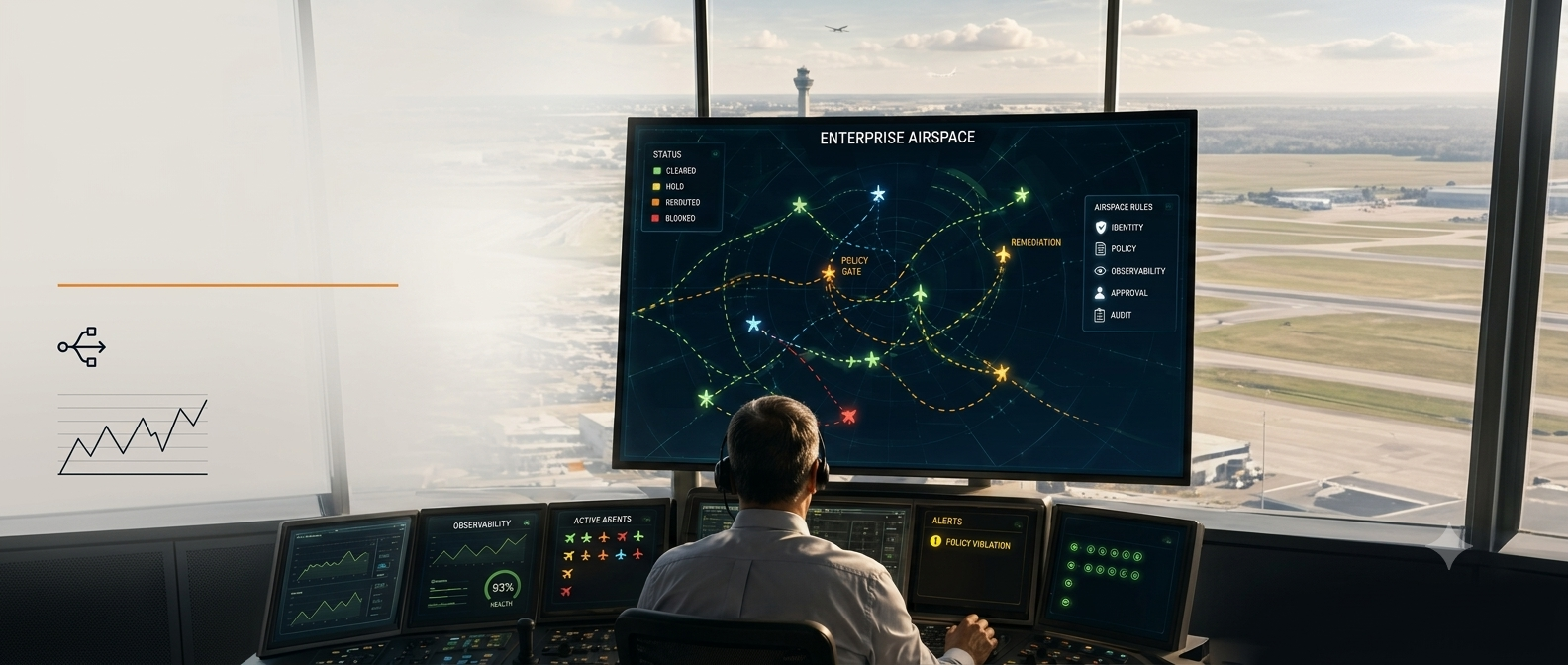
So, EnterpriseClaw. Forget the marketing fluff. What Automation Anywhere seems to be building is an actual environment. A place where AI agents can play in enterprise workflows but stay tethered. Authenticated. Governed. Visible. Hooked into the existing plumbing. This is the missing piece. The gaping hole.
Most outfits have models. They have APIs. They have copilots chirping advice. They have rogue projects tucked away in departments. What they don’t have is operational trust. Not at scale. They lack runtime governance for systems that think for themselves. No reliable way to track probabilistic chaos in production. No standard identity for AI agents wielding real permissions. And certainly no confidence that this autonomous execution won’t blow up the whole darn business.
The partner list? It’s a signal.
Is This The Future of Enterprise AI, Or Just a Band-Aid?
Automation Anywhere’s pitch is clear: they want to provide the guardrails for this impending AI free-for-all. Their EnterpriseClaw initiative, built on partnerships with tech heavyweights, aims to create a secure and governed execution layer for AI agents within existing enterprise infrastructure. It’s a bold move. The market is begging for this. But building a framework for autonomous, probabilistic systems is like trying to nail jelly to a wall. The inherent unpredictability of AI agents operating with broad enterprise permissions is the core challenge.
This isn’t just about stitching together APIs. It’s about building an entirely new operational paradigm. One that can handle systems that learn, adapt, and make decisions in real-time. And for all the talk of partnerships and platform enhancements, the fundamental question remains: can any system truly tame the wild beast that is AI when it’s unleashed across complex, legacy enterprise environments without introducing its own set of equally gnarly problems?
Most organizations already have access to models. They have APIs. They have copilots. They have experimental projects running inside isolated business units. What they generally do not yet have is operational trust at scale.
That quote nails it. The technology is here. The models are available. The excitement is palpable. But the operationalization – the safe, governed, auditable deployment of AI agents into the heart of enterprise operations – remains the yawning chasm. Automation Anywhere is stepping into that chasm, armed with partnerships and a platform vision. The question is whether their bridge will hold.
Why Is This Happening Now?
The sudden urgency around operationalizing AI isn’t arbitrary. It’s a natural progression. Early AI discussions focused on the ‘what’ – what AI could do. Now, companies are grappling with the ‘how’ – how to make AI do it reliably, securely, and without burning down the house. This shift from experimentation to execution is driven by tangible business needs and the growing realization that without strong governance and infrastructure, the potential benefits of AI remain out of reach. The risk simply becomes too high.
This isn’t a problem confined to a single department. It’s an enterprise-wide challenge. As AI agents are granted access to more systems and data, the potential for cascading failures or security breaches multiplies exponentially. The investments Automation Anywhere and others are making signal a broader industry recognition that AI can’t just be a feature; it needs to be an integrated, managed, and deeply understood part of the enterprise IT landscape. That requires an “automation layer” that acts as a central nervous system.
Enterprise AI Execution Layer
This is the core concept. Automation Anywhere isn’t just building another AI tool. They are positioning themselves as the architects of the infrastructure that will run enterprise AI. Think of it as an operating system for AI agents, providing the essential services like identity management, security, observability, and governance that traditional operating systems provide for applications.
Probabilistic vs. Deterministic Systems
Understanding this distinction is key. Deterministic systems follow a predictable path. You know the inputs, you know the outputs. Probabilistic systems, like many AI agents, operate with inherent uncertainty. Their behavior can change based on context, data, and internal learning. This unpredictability is where the operational challenges and risks lie. Managing these systems requires a different approach than managing traditional software.
Partnership Ecosystem
The collaborations with Cisco, NVIDIA, Okta, and OpenAI aren’t just for show. They represent an attempt to build a comprehensive ecosystem. NVIDIA provides the AI hardware muscle. OpenAI offers cutting-edge models. Okta handles identity and access. Cisco likely contributes network and security infrastructure. Together, they aim to create a more complete solution for deploying and managing enterprise AI.
Operational Trust
This is the holy grail for enterprise AI. It’s not enough to have AI that can perform a task. Enterprises need to trust that the AI will perform it correctly, securely, and in alignment with business policies. Building this trust requires transparency, auditability, and strong governance mechanisms – precisely what Automation Anywhere is trying to deliver with its new platform.
Future AI Infrastructure
The trajectory is clear. As AI becomes more embedded in business processes, the underlying infrastructure will need to evolve. This means moving beyond traditional IT management tools to embrace solutions designed specifically for the unique demands of autonomous, learning systems. The “automation layer” concept is a significant step in that direction, signaling a shift towards more sophisticated and integrated AI operations.
**
🧬 Related Insights
- Read more: Project Glasswing: Big Tech’s $100M Bet to AI-Arm Open Source Defenders
- Read more: Human Memory: The Costly Infrastructure?
Frequently Asked Questions**
What does Automation Anywhere’s EnterpriseClaw actually do?
EnterpriseClaw is an initiative by Automation Anywhere to build a platform that acts as an execution environment for AI agents within enterprise workflows, focusing on governance, security, and observability.
Will this new AI platform replace traditional RPA?
It aims to go beyond traditional RPA by automating judgment and decision-making, not just repetitive tasks. While it builds on automation principles, it addresses a more advanced use case for AI agents.
Is this announcement about a new AI model?
No, it’s primarily about the infrastructure and operational layer for running AI agents and their associated workflows within an enterprise context, rather than a new AI model itself.