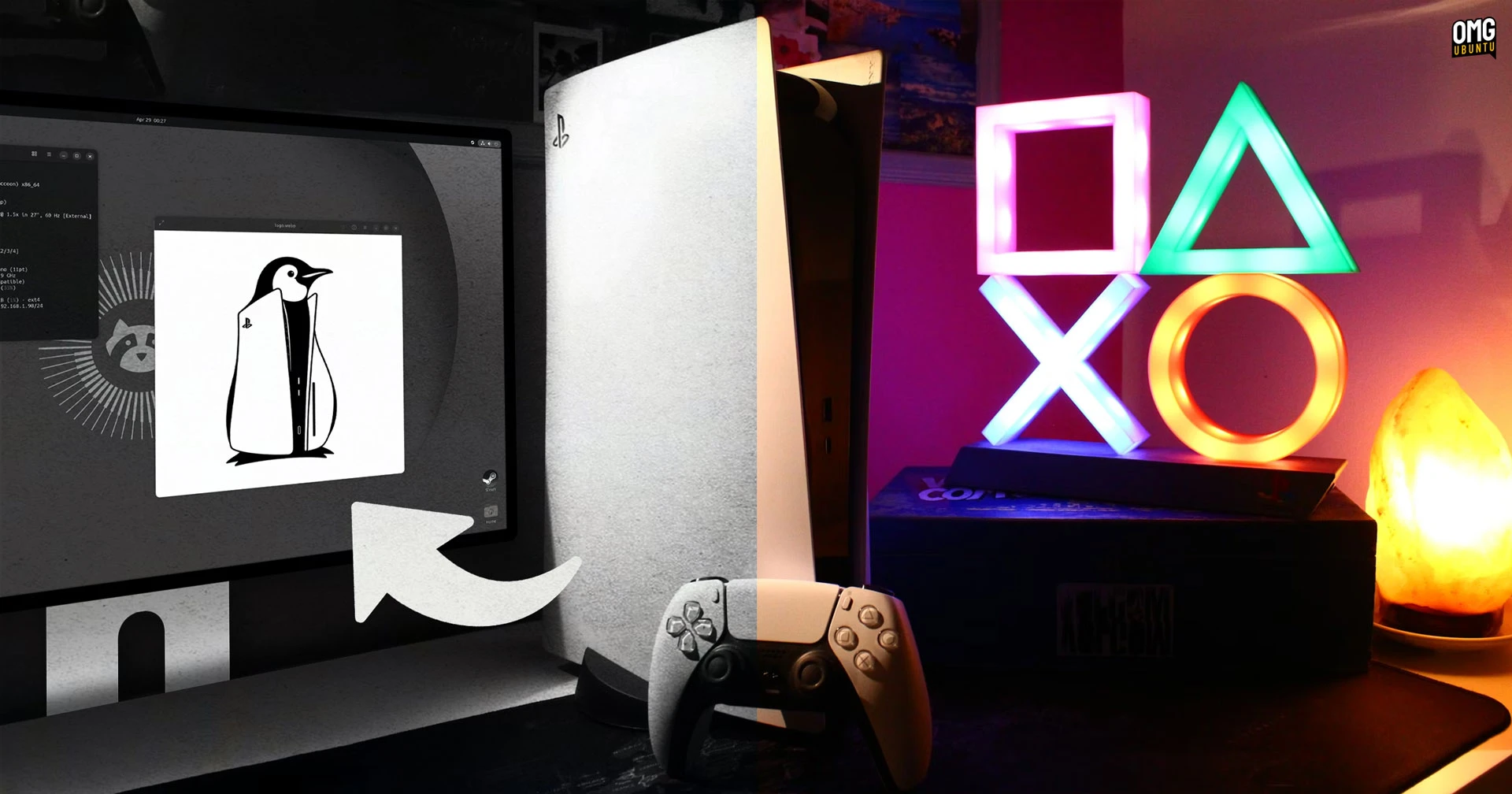
This week, the whispers about turning your PlayStation 5 into a functional Linux PC solidified into a public project, and the implications for hardware repurposing are fascinating. Security engineer Andy Nguyen has released ps5-linux-boot, a project enabling users with specific, older PS5 firmware versions (think 3.xx and 4.xx) to install and run Ubuntu, complete with access to Steam games. It’s a stark reminder that even the most locked-down consumer hardware can have a hidden life, especially when a vulnerability surfaces.
The core of this hack hinges on a patched hypervisor vulnerability. What this does, essentially, is grant Linux direct, unfettered access to the PS5’s considerable hardware. We’re talking about an eight-core Zen 2 CPU pushing up to 3.5GHz, an RDNA 2 GPU capable of 2.23GHz, and native 4K60 HDMI output. Nguyen himself showcased this by running Grand Theft Auto V Enhanced with ray tracing at a silky-smooth 60fps in 1440p. It’s almost quaint that he’s running Ubuntu 26.04 LTS—a newer version than many desktop users bother with.
Is This a True PS5 PC Replacement?
Let’s be clear: this isn’t some plug-and-play solution that will magically transform every PS5 into a gaming rig. The project, as detailed on its GitHub page, demands a significant degree of technical engagement. First, you need a PS5 “Phat” model running one of the specific firmware versions—3.00 through 4.51. Forget about newer consoles; Sony’s patching efforts have shut this door for most users. The output is also currently capped at 60Hz, and Bluetooth doesn’t work out of the box, meaning you’ll need a USB dongle for your DualSense controller.
The setup itself involves building a Linux image, using a USB drive (64GB minimum), potentially a USB Ethernet or Wi-Fi adapter, and connecting a keyboard and mouse. It’s a far cry from a simple system update.
“PS5 Phat console on 3.xx and 4.xx [Firmware] into a fully functional Linux PC gaming device”
This is a soft-mod, too. Each time the console reboots, you’ll need to re-run the exploit. While not ideal, it’s a small price for those who value the freedom to tinker and, frankly, to thumb their nose at proprietary ecosystems. Once booted, Ubuntu behaves much like any other x86-64 Linux machine. All USB ports are functional, and there are tools available for tweaking CPU and GPU clocks—though caution is advised regarding thermal management.
The primary draw here, beyond the sheer technical challenge and the ‘because I can’ factor, is the ability to install the Linux version of Steam and play PC games. While you could technically install LibreOffice and get some work done, let’s be honest, that’s not the point of this particular endeavor. It’s about pushing the boundaries of what a dedicated gaming console can be.
Why Does This Matter for Open Source Hardware?
The true significance of projects like ps5-linux-boot lies in their demonstration of hardware’s latent potential. For years, the conversation around open source and gaming consoles has been a frustrating back-and-forth. Companies like Sony and Microsoft pour billions into proprietary hardware and software, effectively locking down their platforms. Yet, as demonstrated by this PS5 exploit, the underlying architecture often shares more in common with standard PC hardware than manufacturers would like us to believe.
This isn’t the first time a console has been coaxed into running another operating system. From the original Xbox running Linux to various jailbreaks on Nintendo consoles, there’s a consistent history of communities pushing to break free from vendor control. What makes the PS5 situation particularly interesting is the sheer power of the hardware involved. A machine designed for cutting-edge gaming is now, in the hands of dedicated users, capable of serving as a fully functional desktop.
The market impact here is subtle but real. While it won’t cannibalize PS5 sales or even significantly dent Sony’s bottom line, it represents a win for the tinkerer community and a data point for the ongoing debate about device openness. It fuels the idea that hardware, once purchased, should offer users a degree of freedom beyond its intended purpose. For developers and enthusiasts who value control and flexibility, this is more than just a neat trick; it’s a vindication. It’s a reminder that proprietary locks are rarely impenetrable, and that innovation often thrives in the spaces left open by restrictive ecosystems.
We’re essentially seeing a consumer-grade supercomputer, designed for gaming, being repurposed for general computing tasks—and running games through Steam, no less. It’s a proof to the ingenuity of the open source community and their persistent drive to unlock the full potential of the hardware we own. The market dynamics of gaming consoles have always leaned towards control, but hacks like this subtly shift the power back to the user.
🧬 Related Insights
- Read more: Daily Briefing: April 16, 2026
- Read more: The Laptop Return That Exposed RAG’s Dirty Secret
Frequently Asked Questions
What is the ps5-linux-boot project? The ps5-linux-boot project is an unofficial effort that allows users to install and run Ubuntu Linux on a PlayStation 5 console, enabling the use of Steam and other PC applications.
Can I install Ubuntu on any PS5? No, this exploit is only compatible with specific older firmware versions (3.xx and 4.xx) of the original ‘Phat’ PlayStation 5 model. Newer consoles and updated firmware versions are not supported.
What are the limitations of running Linux on a PS5? Limitations include the requirement for specific older firmware, the need to re-run the exploit after each reboot, output capped at 60Hz, and non-functional built-in Bluetooth, requiring a USB dongle for controllers.