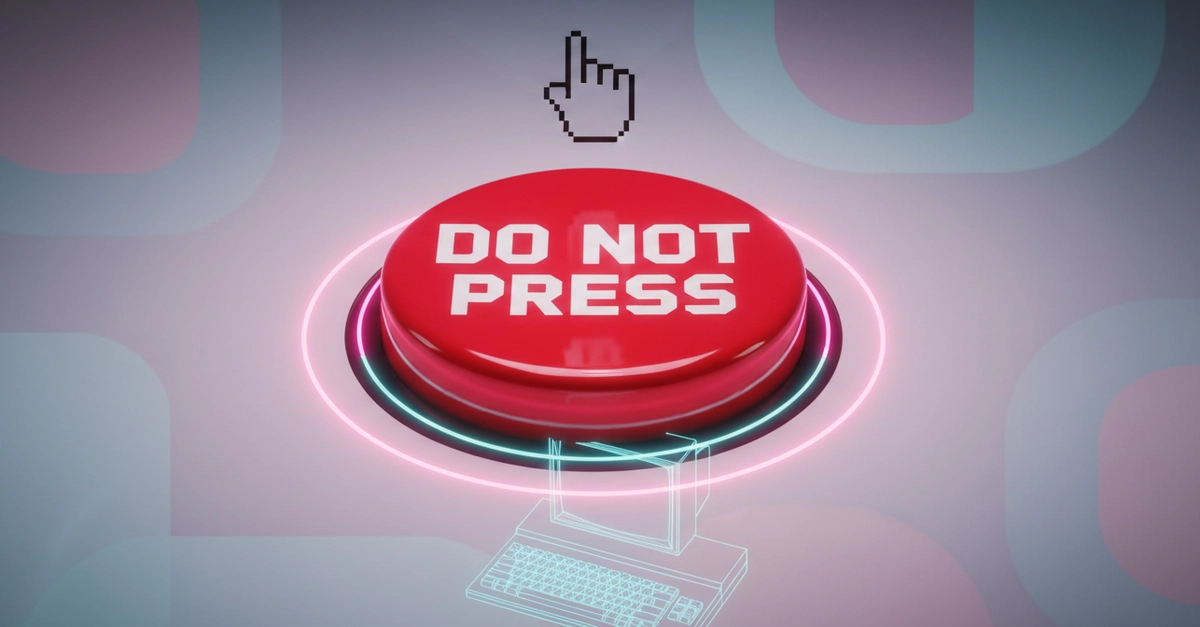
Expectations ran high for DEV’s April Fools Challenge. Clever AI pranks. Blockchain Easter eggs. Maybe a fake quantum debugger. Nah.
This ‘Do Not Press’ button flips the script. One file. Zero fluff. It stares you down, dares you, then slaps back with regret.
Big red. Screaming prohibition. Press it? Regret meter spikes. Twenty-five guilt trips queued up.
Why Devs Can’t Resist This Forbidden Click
Look, we’ve all been there—signs begging ‘don’t,’ and our fingers twitch. But devs? We’re wired worse. Curiosity’s our drug. This button’s the purest trap.
Creator Sarvesh dropped it simple: HTML, CSS, vanilla JS. No npm hell. No Docker drama. Built in under an hour. And it stings because it’s true—total usefulness: zero.
Here’s the bite. Press once, get a snarky message. Twice? Escalation. By ten, page title mocks you. Twenty? HR complaint filed. Thirty? You’re cooked.
It mirrors us. That itch to poke the unknown. Reminds me of the Garden of Eden apple—except this fruit’s digital, and the snake’s your own damn hand. Unique twist: in an era of megabyte repos, this one-kilo file calls bullshit on complexity. Minimalism as rebellion.
This button is a mirror. What does it say about you that you pressed it?
Pressed it yet? Live at sarvesh555.neocities.org/do_not_press_button. Go on. Prove you’re above it.
Spoiler: You’re not.
The regret meter? Genius touch. Starts red, amber at 70%, black-hole crimson at 100%. UX for self-loathing. Every click judges harder—verdicts from ‘mildly regrettable’ to ‘seek therapy.’
Is ‘Do Not Press’ the Anti-Framework Manifesto We Need?
Frameworks promise salvation. React for state. Vue for vibes. But they bloat. This? Pure. No deps. No build. Just you, the button, and shame.
Community laps it up—‘Favorite’ status earned. Why? We crave the poke. Told ‘no,’ we barrel in. Classic human glitch, dev edition.
But here’s my hot take: this predicts the backlash. Tired of JS fatigue? Yearn for 90s web? This button’s your manifesto. Press it 50 times (yeah, someone will), and it’s therapy. Or indictment.
Research claim? ‘Way more presses than expected.’ Spot on. I hit 12 before rage-quitting. You?
Regret levels fill slow at first—teasing. Then avalanche. Button swells mockingly. Title changes to ‘Why Did You Do This?’ Pure psychological warfare.
And the HR bit? Gold. Imagines your boss peeking over shoulder. ‘Filing complaint on your behalf.’ We’re adults. Still press.
So, what changes? Nothing world-shaking. But in dev world, it spotlights joy in stupid simple. Amid AI hype, cloud wars, this says: sometimes, dumb fun trumps all.
April Fools? Sure. But truth serum too. Pressed it live—regret maxed at 15. Pathetic.
Yours’ll be worse.
Corporate spin? None here. Just raw, open-source honesty. No VC pitch. Share it. Fork it. Add your own shame messages.
The Button’s Secret Tech Stack (Spoiler: There Isn’t One)
Dive in—single HTML. Button onclick=’pressIt()’. Function increments counter, spits message, pumps meter. Title hacks at milestones. Done.
No webpack. No Babel. Vanilla forever. Build time: <60 mins. That’s the flex.
Escalating verdicts? Handcrafted disappointment. ‘Poor choice.’ Then ‘Why?’ Peak: existential dread.
Neocities host—retro as hell. Fits the vibe. No AWS bill. Zero infra.
This ain’t revolution. It’s reminder: overengineer much?
Pressing changes zilch globally. But personally? Forces mirror-gaze. Why chase forbidden? Dev life’s full of ‘em—prod deploys at 2AM, untested libs.
Button wins by losing. Does nothing. Exposes everything.
**
🧬 Related Insights
- Read more: Google’s Gemma 4 Just Made Expensive AI Models Look Ridiculous
- Read more: AI’s Hidden Bills: Track Multi-Provider Costs Before They Bury You
Frequently Asked Questions**
What is the Do Not Press button? Single HTML April Fools project. Big red button builds regret meter on clicks. Twenty-five shame messages. Zero payoff.
How many times do people press Do Not Press button? Creator’s research: way more than sane. Expect 10-30 before quit. Test yourself.
Where to try Do Not Press button live? sarvesh555.neocities.org/do_not_press_button. Click at own risk. Or don’t—be the hero.