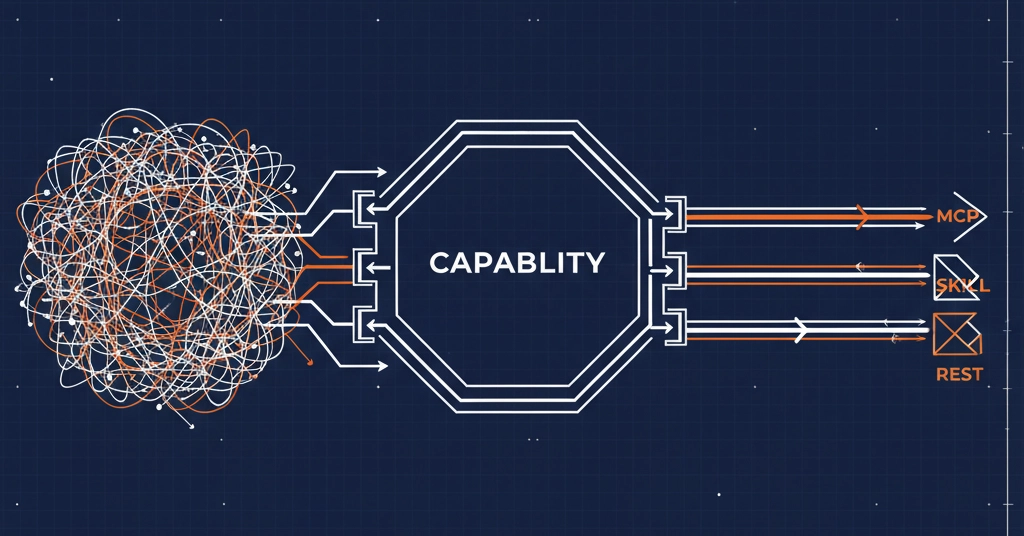
Naftiko Framework Alpha 1: API Sprawl's New Best Friend for AI Agents
Imagine your 14,000 internal APIs not as a headache, but as fuel for unstoppable AI agents. Naftiko Framework Alpha 1 just made that real.
VPS overlords want your wallet. Self-hosting promises escape. But is it all it's cracked up to be?
Picture your AI sidekick sniffing out sarcasm or your boss's lies. Sounds great for real life. But these 'reasoning' breakthroughs? Mostly clever hacks dressed as smarts.
Cloud APIs were the future of AI agents. Then local LLMs flipped the script, letting frameworks like LangGraph and Smolagents run production-grade agents on your hardware—no data leaks, no vendor lock-in.
Terraform promised IaC bliss for my Proxmox homelab. Then it hit the 'can't delete running VM' wall. This curl + jq script smashes through.
Docker pulls for AI tooling spiked 300% last quarter—now asqav-mcp joins the fray. This MCP server locks down agent actions with immutable images and bilateral receipts.
You hit deploy on your shiny Supabase app. Hours later: 'Dude, I can read every user's emails.' Row Level Security's dirty secret strikes.
Everyone figured Gemma 4 would limp on local hardware, especially Apple Silicon. Wrong. One pip install, and it's screaming 85 tok/s with tools — Ollama's toast.
Forget annual SSL renewals. The industry's new rules cap certificates at 200 days now, heading to 47 by 2029. Manual processes? Dead. Automation? Mandatory.
Picture this: one dev, one LLM, a full feature shipped by lunch. Then Monday's enterprise grind hits. The vibe coding paradox demands a reckoning.
Picture this: your shiny agentic AI agent flakes out in production, tasks pile up, and your logs? Useless gibberish. Time to ditch the hype and get debugging right.
Three researchers just reset the quantum threat clock to 2029 for ECC-based agent identities. Protocols shipping today as 'foundational' could crumble fast.
One dev's shock at a $15,000 AI bill sparks a wake-up call. Here's your guide to tracking multi-provider costs before they torpedo your budget.
Samsung's S26 Ultra dominates benchmarks, but its sky-high price and meh upgrades scream corporate greed. Time to question if 'best' means best for your wallet.
What if AI could spot cyber bugs before hackers do—in minutes, not months? Project Glasswing unites fierce rivals like Apple, Google, and Microsoft with Anthropic's Mythos to secure our shared digital backbone.
Everyone figured C++26 would trim the fat after years of bloat. Instead, it stuffs in Contracts—a feature its own creator slams as unminimal and unusable.
OpenAI's GPT-4o charges $2.50 per million input tokens. Scale to production, and your bill explodes. Enter the three table pattern—requests, responses, exchanges—that makes every AI round-trip traceable and cheap to audit.
Earbuds aren't just audio gear; they're ear-inserted bacteria traps. A $6 tool changes the game, forcing regular cleanings without the hassle.
Everyone's chasing scalability and throughput. But without architectural mobility, your system's just a brittle athlete waiting to snap.
Picture this: you're knee-deep in a Python project, fumbling with slow package installs, when suddenly an AI agent zips through your workflow like a caffeinated squirrel. OpenAI's acquisition of Astral just made that future a lot closer.