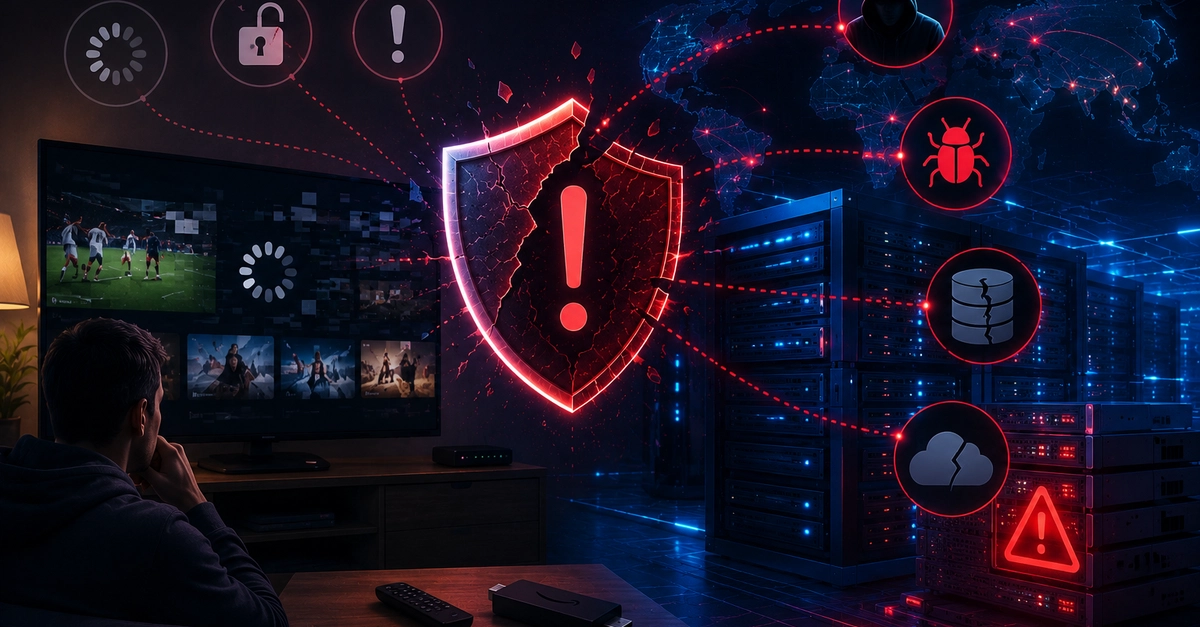
Here’s a data point that should stop you mid-scroll: Over the past few years, a quiet menace has been infiltrating the arteries of IPTV infrastructure, and it’s not just about your internet speed.
It’s infrastructure security, and it’s rapidly becoming the boogeyman behind those infuriating buffering wheels and vanished channels. Forget imagining IPTV as some simple, innocent playlist; the reality is a sprawling, complex beast. We’re talking reverse proxies, load balancers, transcoding nodes, authentication APIs – a whole digital city humming behind the scenes. And when a single critical building in that city, especially one running on Linux or a web panel, gets a serious vulnerability — BAM! The whole metropolis can shudder.
It’s like finding a tiny crack in the foundation of a skyscraper. You might not see it from the street, but it’s there, slowly, insidiously weakening the entire structure. When a provider decides to punt on crucial patches because, heavens forbid, they might have to take a server offline for an hour (customer complaints, refund requests, the horror!), they’re not just delaying maintenance; they’re inviting disaster. This isn’t just about avoiding a temporary hiccup; it’s a stark choice between a calculated, brief instability now versus the much higher probability of a catastrophic compromise later.
Why Does This Matter for Users?
So, you’re just trying to watch your shows. Why should you care about some obscure server CVE? Because those abstract technical glitches have a direct, messy, and visible impact on your viewing experience. A compromised server or network isn’t just a line item in an IT report; it’s your favorite channel disappearing into the ether, or your login suddenly spitting an error. The table shows it starkly: random buffering isn’t random; it’s often the overloaded mitigation systems fighting back. Login failures? Authentication services are probably in a digital dust-up. Channels vanishing? Backend routing is likely in a state of utter chaos. The user never sees the code, but they feel the chaos.
The Ghost in the Machine: Aging Infrastructure
What makes the IPTV world particularly susceptible to these creeping dangers is its almost nostalgic reliance on… well, let’s just say vintage technology. We’re not talking about classic cars here; we’re talking about older Ubuntu versions, PHP panels that belong in a museum, legacy Xtream-style middleware, and servers that probably haven’t seen a proper security audit since dial-up was king. This isn’t just a mild inconvenience; it’s like building a cutting-edge AI on a calculator. The attack surface is gargantuan, and unlike the big players with dedicated security SWAT teams, many smaller IPTV operators are flying blind, patch management nonexistent, incident response a vague concept.
It’s a perfect storm, really. The pressure to maintain constant uptime is immense, forcing tough decisions. But delaying those critical updates isn’t a solution; it’s a ticking time bomb. Those short maintenance windows, dreaded by providers, are the very things that can prevent much larger, more damaging outages down the line. The operational risks today are rarely the dramatic Hollywood-style breaches we might imagine. Instead, it’s the quieter, more insidious threats: service degradation that makes playback unbearable, resource exhaustion that grinds everything to a halt, or credential leaks that open the floodgates.
Can Users Do Anything?
While you can’t exactly SSH into a provider’s server to run a sudo apt upgrade, there are still practical steps you can take to protect yourself from the fallout. Think of it as self-defense in the digital wild west. Avoid shouting your login details from the virtual rooftops, use passwords that are more than just your cat’s name (seriously!), and be wary of unofficial apps that whisper sweet nothings about free content but might be silently downloading malware. Using a VPN when privacy is paramount is always smart. Ultimately, if a provider’s infrastructure is consistently shaky, reliability is just a distant dream. It’s a stark reminder that in the world of streaming, reliability is inextricably linked to how professionally the backend is managed.
As IPTV systems continue their complex dance of complexity, the vulnerabilities lurking in Linux servers, APIs, or authentication layers are no longer abstract problems. They’re the invisible saboteurs directly impacting your binge-watching session. The once-clear line between infrastructure security and user experience has blurred into oblivion.
🧬 Related Insights
- Read more: Higress: AI Speeds Ingress NGINX Migration 60+ Resources
- Read more: Igris: One Dev’s AI Clone That’s Equal Parts Genius and Gimmick
Frequently Asked Questions
What is CVE-2026-31431?
While the specific details might be hypothetical or represent a class of vulnerability, it serves as an example of a serious security flaw that could affect IPTV infrastructure, leading to user-facing issues like outages and buffering.
Are all IPTV services affected by these security issues?
While the risk exists for any connected system, services that rely on older, unpatched, or poorly managed infrastructure are significantly more vulnerable. Mainstream, well-funded services generally have more strong security practices.
Can I fix my IPTV provider’s security issues myself?
No, users cannot directly fix the backend security issues of their IPTV provider. However, choosing providers with a reputation for good operational practices and following basic online security hygiene can help mitigate some risks.