What if the proteins powering tomorrow’s vaccines or cancer drugs could be dreamed up on your laptop, folded in silico, and codon-tweaked for elephants or yeast — all before lunch?
That’s no sci-fi. OpenMed’s new pipeline does exactly that, training mRNA language models across 25 species for a laughable $165. And it’s open source. Buckle up — this is biology’s GPT moment, where AI doesn’t just predict words but rewires life’s code.
Look, we’ve seen language models conquer text, images, even code. But mRNA? Codons? That’s the gritty underbelly of biotech, where a single triplet swap can tank expression rates by 100x. OpenMed didn’t flinch. They built an end-to-end beast: structure prediction via ESMFold, sequence design with ProteinMPNN, and their crown jewel — custom codon optimizers that learn species biases from raw data.
Why Bother with mRNA Language Models Across 25 Species?
Because one-size-fits-all DNA is dead. Pfizer nailed COVID vaccines by human-optimizing codons, but what about pig flu for swine? Or silk proteins in bacteria? OpenMed’s multi-species suite — four production models, 55 GPU-hours — crushes that. No other open project offers this. It’s like handing biohackers a universal translator for genomes.
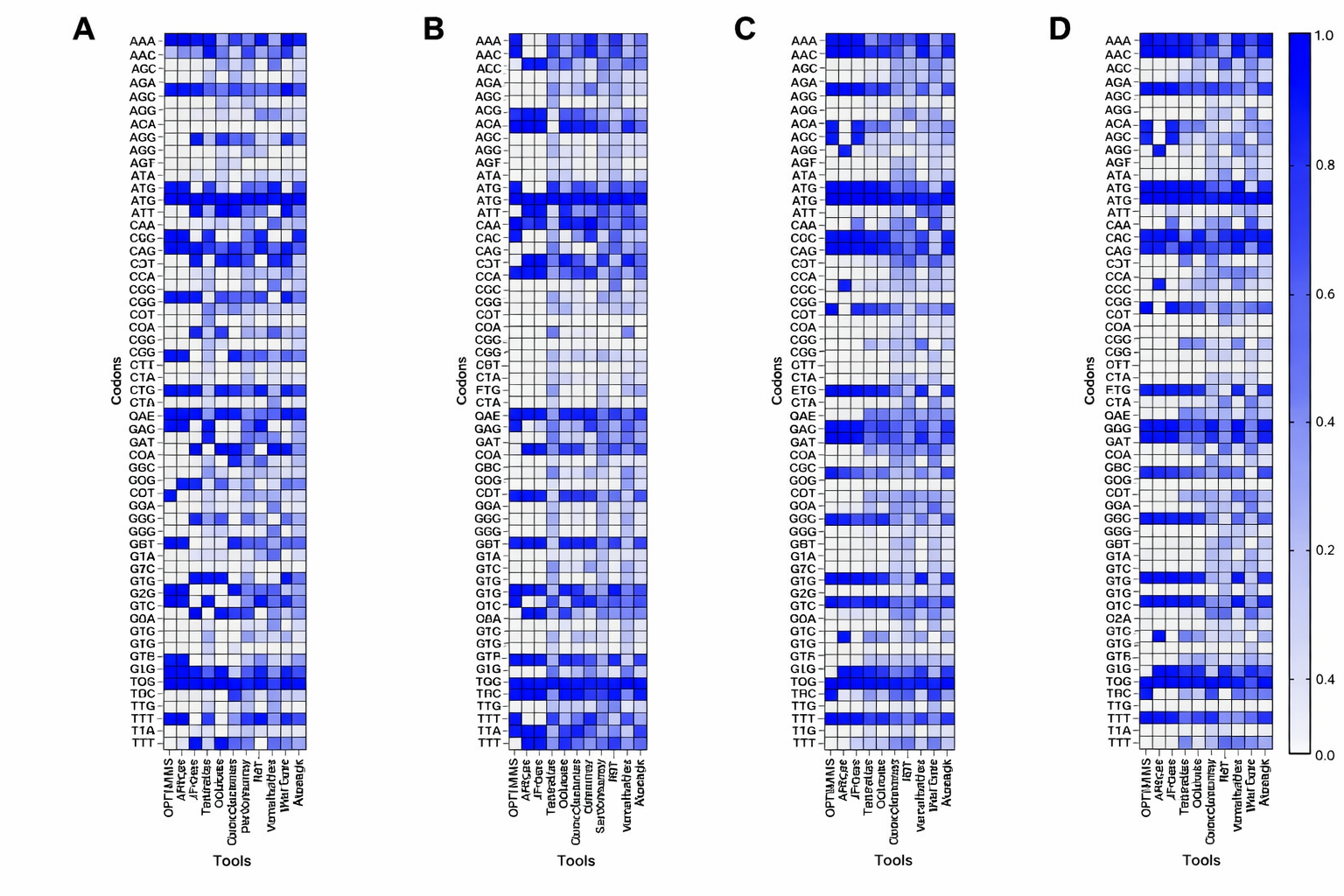
Here’s the thing: they experimented hard on architectures. BERT baselines? Meh. ModernBERT with its fancy RoPE? Close. But CodonRoBERTa-large-v2? Perplexity 4.10, Spearman CAI 0.40 — smoked the field. Why? Codons aren’t sentences; they’re rigid triplets from a 64-token deck, laced with organism quirks. RoBERTa, that ESMFold workhorse, just groks it better.
We then scaled to 25 species, trained 4 production models in 55 GPU-hours, and built a species-conditioned system that no other open-source project offers.
Boom. That’s from their TL;DR — transparent, no fluff. (And yeah, they share the code. Run it yourself.)
But wait — protein folding first. ESMFold v1 on 30 chains, average PTM 0.79. Solid batch pipeline. Then ProteinMPNN designs sequences recovering 42% on scaffold 7K00. Established tools, but chained together? Fresh hell for proprietary labs.
Which Transformer Crushes Codon Optimization?
They pitted heavyweights. CodonBERT (6M params, Sanofi-style tiny BERT): baseline floor. ModernBERT-base (90M, 22 layers, long-context tricks): innovative, but fizzled. CodonRoBERTa-base (92M): the champ’s little bro.
Surprise? RoBERTa edges out because codon stats mirror protein sequences more than chatty NLP. Positional dependencies, degeneracy — it’s biological poetry, not prose. OpenMed’s insight: don’t shoehorn NLP hacks; evolve from protein AI roots.
Scaling? From 250k CDS to 381k across species. Four models cover 25 organisms. Cost? $165. That’s peanuts — think lunch for a lab tech, not a supercomputer binge.
And the workflow? smoothly. Input: protein concept. Output: codon-optimized DNA, ready for synth. No hand-crafted tables; pure learned biases. This isn’t hype; it’s a build log with failures flagged. They admit surprises, tweaks they’d redo. Human as hell.
Now, my hot take — and it’s one you won’t find in their post. This echoes the Human Genome Project’s open-data pivot in the ’90s. Back then, Celera’s closed vault sparked Craig Venter’s public dump, slashing costs 100x. OpenMed’s doing that for AI-driven protein eng. Garage biologists, rise up: custom enzymes, therapeutics, biofuels — yours for $165. Prediction? In two years, we’ll see indie vaccines tweaking these models for rare diseases Big Pharma ignores.
Skeptical? Fair. Folding accuracy holds for small chains; big multisubunit beasts might wobble. Sequence recovery at 42%? Decent starter, but not hallucination-free. Codon models shine on natural data — synthetic edge cases? Jury’s out. Yet, for open source, this laps closed rivals.
The end-to-end magic ties it. Structure -> design -> codons. One afternoon from idea to oligo order. That’s platform shift stuff — AI as biotech OS.
Picture this: a high schooler optimizing spider silk for E. coli, printing textiles from bugs. Or climatologists engineering carbon-munching algae, species-tuned. Wonder isn’t hype; it’s inevitable.
So, OpenMed — hats off. You’ve open-sourced the protein factory. What’s next? Multi-modal bio-AI? Organism-conditioned folding? The species barrier just crumbled.
How Does OpenMed’s Pipeline Stack Up?
Against what? Evo’s closed codon tools? Pricey, single-species. Academic scraps? No pipeline glue. This is first-principles built, benchmarked raw. Perplexity wins, CAI correlations pop — data doesn’t lie.
Critique their spin? Minimal. They call out the messiness upfront. Refreshing in a field of polished PDFs.
Evolution feels electric. From AlphaFold’s fold rush to this? mRNA language models are the next wave, and OpenMed surfed it open.
**
🧬 Related Insights
- Read more: WireGuard Strikes Back on Windows: New Release After Microsoft’s Signing Drama
- Read more: Opus 4.5 Just Rewired How Developers Code—And Nobody’s Ready for What’s Next
Frequently Asked Questions**
What is CodonRoBERTa and how does it work?
CodonRoBERTa-large-v2 is a transformer trained on codon sequences, outperforming rivals with perplexity 4.10. It learns species-specific biases directly from data for optimal protein expression.
Can I train mRNA language models for my own species?
Yes — OpenMed’s code and data pipelines are fully open. Scale their 55 GPU-hour setup to your organism with minimal tweaks.
Will OpenMed’s protein pipeline replace lab work?
Not fully — it accelerates design-to-DNA, but wet-lab validation remains key. Expect 10x speedups in iteration cycles.