This isn’t just about another Telegram bot. It’s a story about what happens when raw ambition meets the stark reality of messy code, and how a developer, facing down their own unfinished project, decides to sculpt a masterpiece. For real people, this is a proof to the power of refactoring, the sheer grit required to tame complex systems, and the fundamental idea that even the most daunting codebases can be reshaped into something beautiful and efficient. It’s a beacon for anyone staring at their own ‘spaghetti’ and wondering if it’s possible to untangle it.
Look, most of us start projects with a blaze of glory, right? Ideas flowing, fingers flying across the keyboard. Then, reality hits. That calculator project? The one that was supposed to be a quick win? It quickly devolved into a tutorial-hopping marathon. This is the siren song of programming – the lure of a new idea, the sting of hitting a wall. Our intrepid developer felt this pull, seeing a C++ Telegram bot as the next frontier, especially after stumbling upon a rare YouTube guide. It’s a niche, a blank canvas begging for strokes of genius.
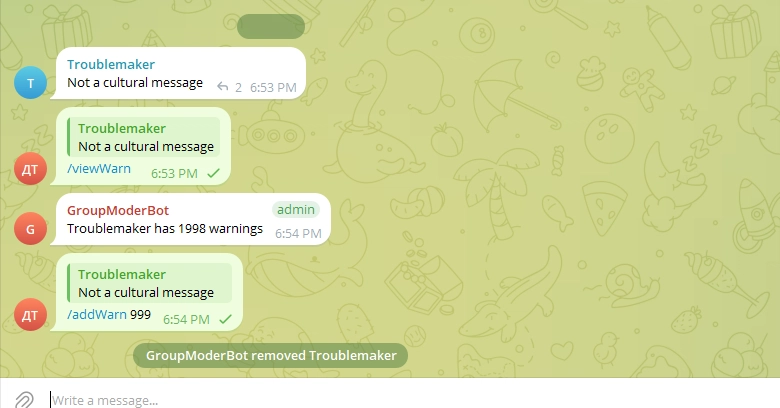
And so, GroupModerBot was born, initially as a digital Frankenstein cobbled together in a single main() function. The tech stack? C++ 20, the tgbot-cpp library for Telegram wizardry, and SQLiteCpp for data persistence. Simple enough for a nascent project. Even in its nascent, ‘as long as it works’ stage, there were glimmers of foresight. Reading configuration from a DataForBot.txt file? Smart. It meant no recompiling just to change a bot token. That’s the kind of practical thinking that separates hobby projects from actual tools.
Then there’s the database integrity. Imagine sending a query into the void, only to have your whole bot crash. Horrifying! Our developer tackled this head-on, creating a unordered_map (though they admit the name needs work – bless their honest coding heart) to define expected tables and columns. This upfront validation, checking if DataBaseHasColumn is true, is like building a moat and drawbridge around your data. It’s not flashy, but it’s the bedrock of stability.
And the owner authentication? Pure ingenuity. A Managers table, an isTableEmpty function, and a confirmation code process – it’s a digital handshake that’s both elegant and secure. It stops unauthorized hands from grabbing the reins before you’ve even had your first coffee.
But, as so often happens, the convenience of the initial build birthed a monster of complexity. That sprawling main() became a labyrinth. The bot wasn’t just a bot anymore; it was a digital beast with all its organs mashed together. The developer, with a raw honesty that’s rare in tech writing, admits it: 5 months, half spent on their day job, and a profound underestimation of the project’s scope. They realized the need for a plan, a clear roadmap out of the code jungle.
This is where the analogy really kicks in. Think of it like building a skyscraper. You wouldn’t just start stacking bricks and hope for the best, right? You need blueprints, structural engineers, different teams handling plumbing, electrical, and the facade. The initial main() function was like throwing up a shack. Now, the project is undergoing a seismic shift, moving towards a more organized, modular skyscraper.
The leap to Object-Oriented Programming (OOP) is the architectural shift we’re seeing. Instead of one giant main() function trying to do everything, the bot’s functionality is being broken down into logical classes – like a UserManager, a ModerationService, or a CacheManager. Each class has its own responsibilities, its own methods, and its own data. This makes the code exponentially easier to read, debug, and extend. It’s like trading in a tangled ball of yarn for neatly organized spools.
And the in-memory cache? That’s the turbo boost. Imagine constantly having to look up the same information from the database – it’s like asking a librarian for the same book every single time you need a quote. An in-memory cache is like keeping a frequently accessed book right on your desk. It dramatically speeds up response times by storing frequently used data in RAM, avoiding slow database lookups. For a bot that needs to react instantly to user commands, this is crucial.
Then there are the “Fibonacci Mutes.” This is where the creativity really shines. Instead of a simple timed mute, the bot uses a Fibonacci sequence to escalate mute durations. A user muted once gets a short mute. Muted again? A slightly longer mute. And so on, with the mute times growing exponentially. It’s a sophisticated punishment algorithm that’s both nuanced and, frankly, pretty cool. It shows a developer thinking beyond the basic CRUD operations and into behavioral economics for bots.
What’s the ultimate takeaway here? It’s that good software development isn’t just about writing code that works. It’s about writing code that is maintainable, scalable, and understandable. This C++ Telegram bot’s evolution is a textbook example of that principle in action. It’s a journey from a quick-and-dirty solution to a thoughtfully architected system, proving that dedication and a willingness to refactor can transform chaos into order. This isn’t just about C++ or Telegram bots; it’s about the enduring craft of building things that last.
Why This C++ Bot’s Refactor Matters
This isn’t just a developer showing off their coding prowess – though they’re clearly talented. This is a masterclass in how to rescue a project from the brink of technical debt. The monolithic main() function, a common pitfall for solo developers or early-stage projects, is a ticking time bomb. It makes adding new features a nightmare and debugging a Herculean task. By systematically breaking down the bot into OOP components, implementing caching for performance, and devising clever moderation tools like Fibonacci mutes, this developer isn’t just improving the bot; they’re future-proofing it.
The evolution from a monolithic
main()to a well-thought-out architecture with OOP, in-memory caching, safe command execution, and non-standard user punishment algorithms is a proof to the developer’s growth and dedication to crafting strong software.
The courage to admit the initial approach was flawed and the subsequent commitment to a complete architectural overhaul is what Open Source Beat applauds. This kind of transparent evolution, where the messy middle is laid bare, is more valuable than any polished corporate announcement. It’s a reminder that behind every great piece of software is a human learning, adapting, and striving for excellence. The code itself might be C++, but the underlying principle is universal: good design matters.
What’s Next for GroupModerBot?
With the foundational architecture now strong and the moderation tools increasingly sophisticated, the path forward for GroupModerBot is bright. We’re likely to see further refinements in command handling, perhaps an expansion of its moderation capabilities to include more nuanced behavioral analysis, or even integration with other services. The in-memory cache will continue to ensure snappy performance, while the OOP structure means new features can be added with relative ease. The developer’s ambitious timeline of quitting their day job to focus on the bot suggests a deep commitment, and we can anticipate this project evolving into a truly powerful and indispensable tool for Telegram group administrators. It’s a compelling example of open-source development driven by genuine need and meticulous execution.