The 30-Second Rollback: Why Deploynix's Release Strategy Actually Works (And Why It Matters)
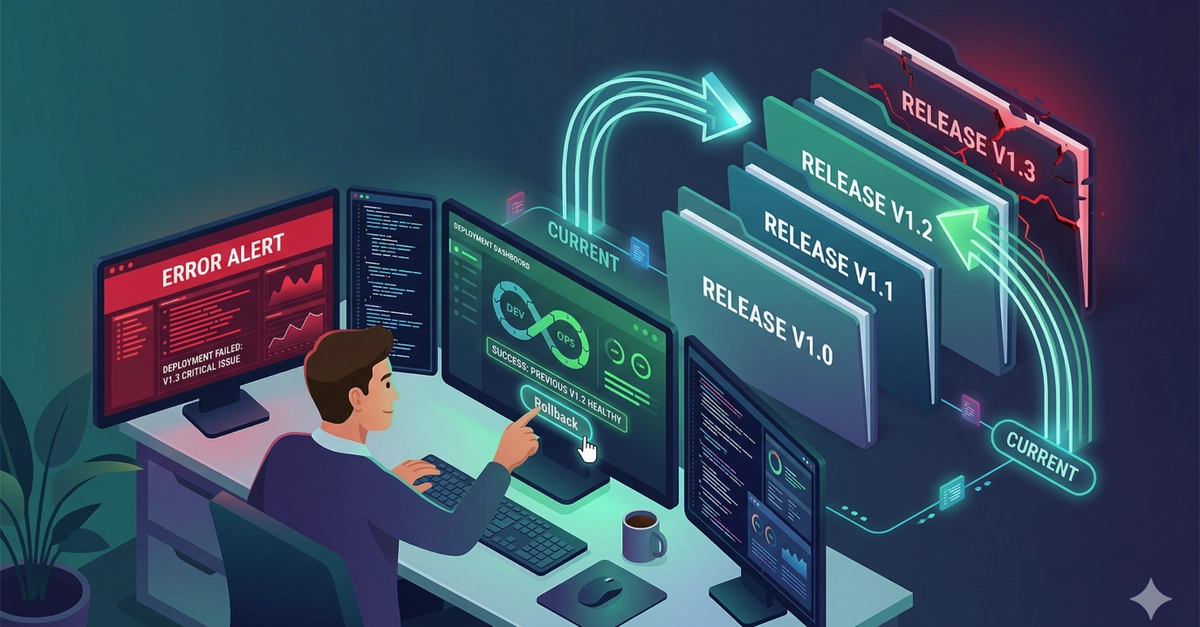
It's 4:47 PM on Friday. Your deployment passed CI, hit production, and immediately broke everything. With Deploynix, you're back to working code in 30 seconds. Here's why symlink-based releases are the closest thing DevOps has to an undo button.
⚡ Key Takeaways
- Deploynix uses atomic symlink swaps to enable 30-second rollbacks—far faster than traditional redeployment approaches that can take 5-10 minutes. 𝕏
- The release-based architecture keeps previous deployments intact on disk, making rollback a symlink operation rather than a full redeployment, but it doesn't solve database migration failures. 𝕏
- Rollback covers code, dependencies, and compiled assets but does NOT undo database schema changes, environment variables, or queued jobs—understanding these boundaries is critical for on-call decision-making. 𝕏
Worth sharing?
Get the best Open Source stories of the week in your inbox — no noise, no spam.
Originally reported by Dev.to
Related Stories

DevOps & Infrastructure
The Irreversible Migration: How to Retire a Mission-Critical Database Without Losing Your Business

DevOps & Infrastructure
How Dead Code Nuked a $1.5B Trading Firm in 45 Minutes

DevOps & Infrastructure
Uber's Go Monorepo Nearly Killed Productivity – And How They Barely Saved It

DevOps & Infrastructure