Everyone expected KubeCon + CloudNativeCon Europe in Amsterdam to be, well, about Kubernetes. The usual suspects: new CNCF projects, shiny distributions, and another hundred ways to automate your infrastructure into oblivion. And sure, that was all there. But something shifted. The whispers you might have missed in the throng of keynote announcements were far more interesting. Platform engineering, it turns out, isn’t just about building better tools. It’s about building better humans who use those tools.
Platform engineering. The term itself conjures images of complex YAML files, complex CI/CD pipelines, and abstracting away the nitty-gritty for beleaguered developers. It’s been about the machine. The code. The infrastructure.
And then KubeCon happened. Suddenly, the conversation pivoted. The humans. The experience. The belonging. Who are we building these platforms for, anyway? A question seemingly so simple it’s shocking it took so long to become the main event.
The ‘Us’ in Platform Engineering
We’ve always talked about developer experience, or DevEx. But KubeCon Europe 2026 turned that into a full-blown philosophical — and practical — reckoning. Sessions didn’t just focus on how to abstract API boundaries or streamline onboarding. They zeroed in on whose perspective shaped those decisions. Are we building platforms that reflect the diverse needs of everyone on the team, or just the loudest voices?
Decisions about what to expose to developers and what to manage internally affect usability, maintainability, and adoption.
This isn’t just about politeness. It’s about efficacy. A platform designed by a homogenous group will likely fail to account for the blind spots inherent in that limited perspective. Think about it: if your core team all thinks alike, who’s going to catch the usability issue that trips up someone with a different cognitive style or a visual impairment?
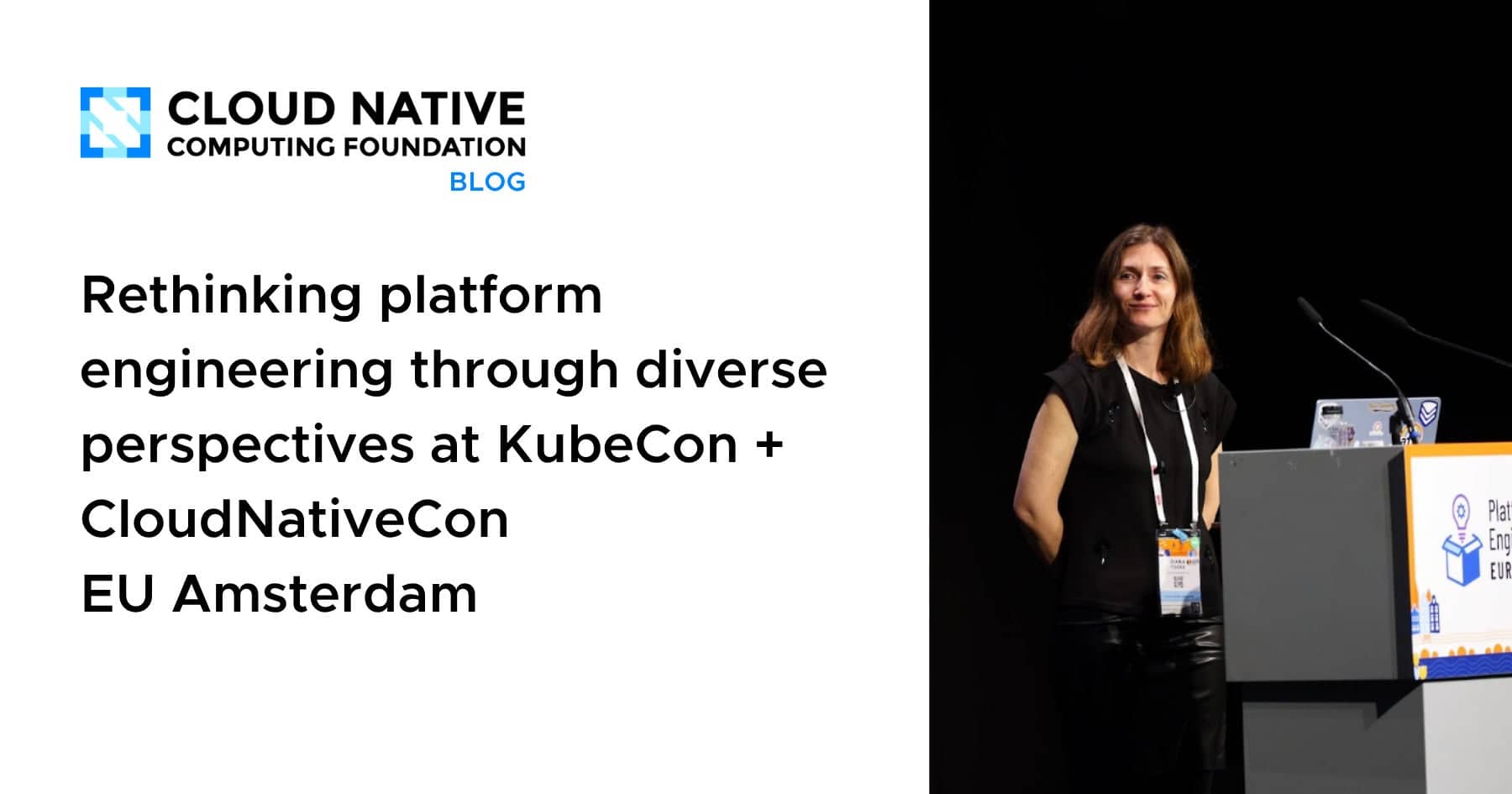
My own participation in a session alongside Elif Samedin highlighted this. We weren’t just talking about refining feedback loops. We were talking about who gives that feedback and how their contributions are valued. It’s a fundamental recalibration. Success isn’t just measured in uptime or deployment speed. It’s measured in how many people can and do use the platform effectively.
Beyond the Code: The Merge Forward Imperative
And then there was the Merge Forward panel. If you missed this, you missed the heart of KubeCon Europe’s emergent theme. Merge Forward, a CNCF initiative, isn’t about code repositories. It’s about people. Specifically, about fostering inclusion for communities focused on disability, gender, neurodiversity, and speech diversity. Their message was unequivocal: you can’t build resilient systems if your teams aren’t built on principles of resilience and belonging.
This is where the corporate spin usually kicks in. “Diversity is our strength!” they’ll crow. But Merge Forward wasn’t offering platitudes. They were offering actionable strategies. How do you attract and retain talent when the very environment might implicitly exclude certain groups? How do you ensure that skilled engineers don’t look at a platform engineering role and think, “That’s not for me”?
It boils down to culture. To empathy. To allyship. These aren’t soft skills to be filed away under ‘HR initiatives.’ They are the bedrock of high-performing teams and, by extension, high-performing platforms. When people feel seen, heard, and valued, they contribute more. They innovate. They stay.
Making the Invisible Visible: Neurodiversity Takes Center Stage
For the first time, KubeCon Europe hosted a dedicated session on neurodiversity within the Community Hub. This was a significant moment. For too long, the tech world has operated on a default assumption of a specific way of thinking, processing, and interacting. Neurodivergent individuals often face systemic barriers – from hiring processes that favor certain communication styles to networking events that can feel overwhelming. This session sought to change that.
It was more than just a discussion. It was an interactive exploration of how neurodiversity manifests in tech and, crucially, what practical steps can be taken to build more inclusive environments. This wasn’t about inventing entirely new tools. It was about adapting existing practices: clarifying communication, providing structured guidance, and creating spaces where different cognitive approaches are not just tolerated, but celebrated.
The implication here is profound. If we can build systems and communities that actively support neurodivergent contributors, we unlock a vast pool of talent and innovation that has often been marginalized. This isn’t a charitable act; it’s a strategic imperative for any organization seeking to stay competitive in the long run.
The Platform Engineering Paradox
What we saw at KubeCon Europe 2026 was a fascinating paradox. The industry obsessed with building ever more complex, automated, and scalable technical systems is finally realizing that the most critical component is the human element. The platform itself is only as good as the diverse set of minds that shape it, use it, and maintain it.
This shift isn’t just a trend. It’s a maturation. The cloud-native ecosystem, in its quest for ultimate efficiency, has circled back to the most fundamental truth: technology serves people. And if we’re not building technology for people, considering all people, then what exactly are we building?
This is the new frontier for platform engineering. Less about the ‘how’ and more about the ‘who’. It’s messy, it’s challenging, and it’s infinitely more interesting than another talk about Kubernetes operators.
🧬 Related Insights
- Read more: How 20+ AI Agents Actually Talk to Each Other—Without Enterprise Bloat
- Read more: Cargo’s Hidden Tar Bomb: Malicious Crates That Could Own Your Filesystem
Frequently Asked Questions
What is platform engineering? Platform engineering is the discipline of designing and building tools and workflows that enable software developers to self-serve infrastructure and application services, thereby improving developer productivity and experience.
How does diversity impact platform engineering? Diversity of experience brings varied perspectives to platform design, leading to more inclusive, usable, and effective platforms that cater to a wider range of users and needs.
What is Merge Forward? Merge Forward is a CNCF initiative focused on promoting inclusion and belonging within the cloud-native community by uniting groups that support diverse contributors.