Devktops are targets.
That’s the blunt reality Perplexity is forcing us to confront. Their new open-source tool, Bumblebee, isn’t some fancy enterprise solution. It’s a digital cop for your messy workstation. And frankly, we’ve all got one.
Continuous integration pipelines? They’re great. SBOMs? Essential. They’ve shored up the obvious attack vectors. Attackers, naturally, have moved on. To where? The developer’s laptop. The digital Wild West.
Think about it. Your machine is a graveyard of half-finished projects, experimental dependencies, and that one sketchy package you downloaded at 2 AM. Outdated Node.js versions. Unused terminals. Malware waiting to be activated. Perplexity even points out that their own engineers have agent recipes ripe for malicious augmentation. It’s a given. Your credentials are there, too. A golden ticket.
Your Machine is a Barnacle-Covered Ship
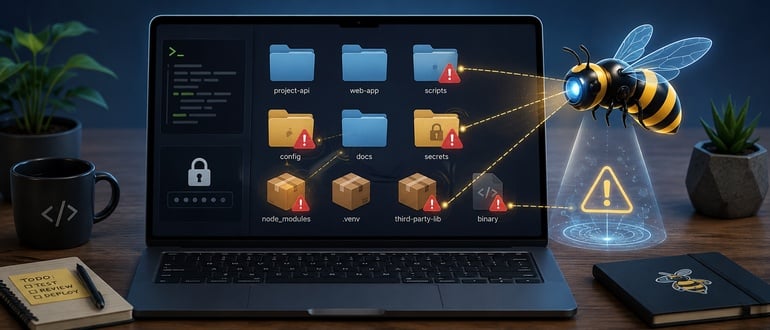
Bumblebee rolls in, read-only, thank goodness. It’s designed to poke around your Linux or macOS machine. It hunts for vulnerable software. Packages. Extensions. AI tool configurations that have already caused trouble elsewhere. It’s like a security guard checking IDs at a party you definitely weren’t invited to.
“Bumblebee is useful to all security teams. Whenever a new vulnerability is reported, they need to know right away if any of their machines were exposed,” states the Perplexity blog.
Sure, it requires setup. Organizations need a threat catalog. Perplexity built theirs by hand, sifting through internal research, public disclosures, and third-party reports. Each potential threat gets a meticulously documented pull request. Then Bumblebee scans your machines. Routine maintenance? Targeted sweeps? A frantic hunt after a new zero-day? It does it all. Package managers like Yarn, npm, PyPI, RubyGems — it checks them. Editor extensions. Browser plugins. It’s thorough.
They’re adamant about the read-only aspect. No accidental malware activations. This isn’t an EDR. It won’t tell you what’s actively running amok. It’s about the latent threats. The sleeping dragons in your lockfiles and manifests.
The Unseen Danger Zone
This isn’t theoretical. Remember CircleCI? A malware-infected laptop. Customer credentials gone. LastPass? A DevOps engineer’s home machine. A keylogger. Master passwords compromised. Code repositories exposed. These aren’t isolated incidents. They’re patterns.
Perplexity’s realization is this: your dev workstation is the blind spot. The dusty corner nobody wants to clean. Bumblebee shines a flashlight into that corner. It’s a good thing, too. Because the alternative is letting attackers have their way.
This tool, born from necessity within Perplexity, is a welcome addition to the open-source ecosystem. It tackles a problem many organizations ignore because it’s messy. Because it’s human. And in that mess, Perplexity is finding the vulnerabilities.
Is Bumblebee a Silver Bullet?
No. It’s a tool. A damn good one, apparently. But it doesn’t replace good hygiene. It doesn’t magically patch your software. It highlights the risks. The rest is up to you. And your IT department, if they’re paying attention. They probably aren’t. Not yet.
Why Does This Matter for Developers?
Because your machine is probably compromised. Or will be. Bumblebee gives you visibility. It’s a chance to clean up before disaster strikes. It’s also a good argument for why IT should be helping you, not just blocking you. Your workstation is critical infrastructure. Treat it like it.
🧬 Related Insights
- Read more: [Key Insight] Why Claude Needs Real Environments for Cloud-Native Code
- Read more: Euro-Office Forks ONLYOFFICE: Sovereignty Win or Open Source Suicide?
Frequently Asked Questions
What does Perplexity’s Bumblebee tool do? Bumblebee scans developer machines (Linux/macOS) for vulnerable software, outdated packages, and risky configurations that could be exploited. It’s a read-only scanner.
Will Bumblebee patch my software? No, Bumblebee is a scanner. It identifies vulnerabilities and potential threats on your machine, but it does not perform patching or remediation itself.