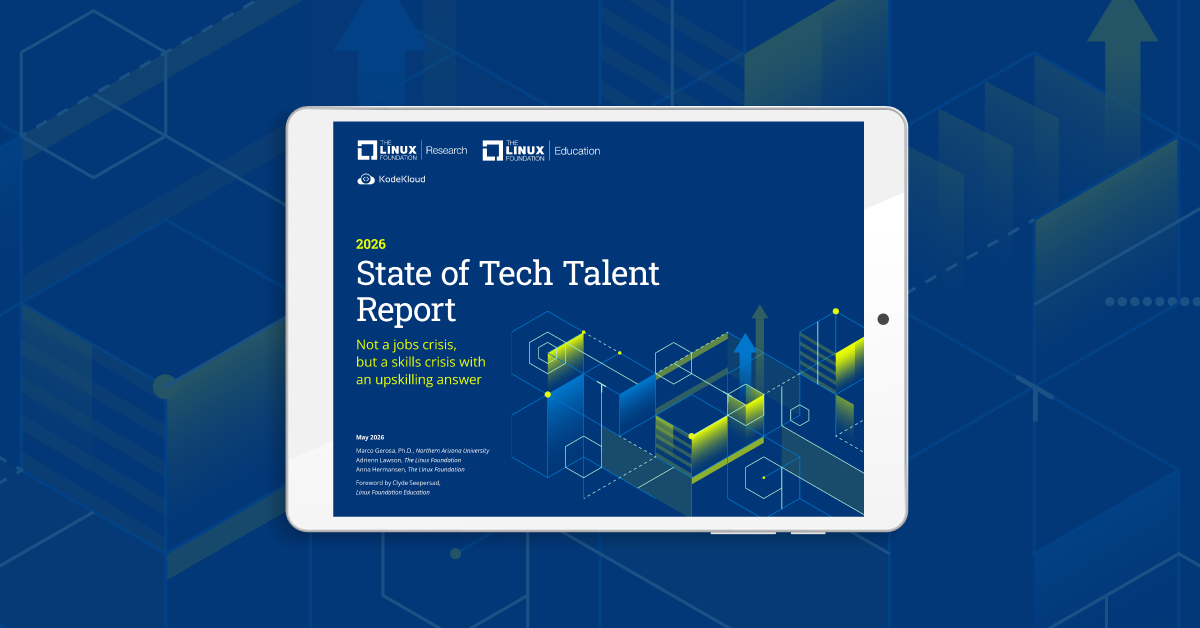
Forget the doomsaying headlines. For months, the narrative has been a relentless drumbeat: AI is coming for your tech job. But the latest 2026 State of Tech Talent Report doesn’t just dissent; it flips the script entirely.
What everyone expected was a wave of automation-induced layoffs, a shrinking workforce facing obsolescence. Instead, the data points to something far more complex: a profound readiness deficit, a widening chasm between the capabilities businesses demand and the skills their current tech staff possess. AI isn’t destroying jobs; it’s fundamentally redefining them, demanding a higher, more specialized bar.
Is AI Actually Growing Tech Jobs?
The numbers, at first glance, are counterintuitive to the public discourse. When you strip away the fear-mongering, the report reveals that aggregate technical roles are actually seeing net positive growth. This expansion is intrinsically tied to AI initiatives, particularly within smaller enterprises and end-user organizations that are actively onboarding talent to integrate and manage these new systems. The bottleneck isn’t a lack of AI tools; it’s the scarcity of personnel who can actually deploy, monitor, and secure them reliably.
The Full-Stack Readiness Deficit
This isn’t just about teaching developers to write better prompts. The report hammers home a critical point: production-grade AI hinges on a strong technological foundation. We’re talking about platform engineering, sophisticated cloud deployments, and meticulous cost optimization. Yet, the data shows a persistent understaffing in precisely these critical infrastructure domains. Organizations are grappling with a severe, full-stack readiness gap, most acutely felt in infrastructure monitoring and specialized operations. They’re still trying to build the scaffolding for automated systems, let alone scale them.
Security: The New Top Barrier
And then there’s security. If the readiness deficit wasn’t stark enough, the report highlights a meteoric, perhaps unsurprising, shift: security and privacy concerns have rocketed from a secondary consideration to the primary obstacle preventing the adoption of new technologies. Generative AI, with its probabilistic nature, introduces entirely novel attack vectors—supply chain vulnerabilities, data poisoning, and autonomous agents bypassing trust protocols without human oversight. The stark reality is that most organizations lack the specialized security expertise to govern these powerful, unpredictable systems. What was once a tooling decision has become a high-stakes risk management exercise.
Because generative AI models function probabilistically rather than deterministically, they present entirely new, unpredictable attack vectors—including supply chain vulnerabilities, malicious data modifications, and autonomous agents crossing critical trust boundaries without human oversight.
This is the core of the problem: the human element, the institutional knowledge, is irreplaceable. You can’t download decades of codebase understanding or ingrained workflow nuances.
The Upskilling Imperative
Faced with these interlocking challenges, a clear strategy is emerging, not from external hiring but from within. The report’s most significant finding? Organizations are now three and a half times more likely to upskill existing employees than to hire externally for strategic tech roles. Why? Because institutional knowledge is gold. It’s the bedrock upon which new AI capabilities must be built. Bringing in external talent often means a long, frustrating ramp-up period, during which they’ll inevitably stumble over the very architectural nuances and data workflows the existing team navigates daily. And let’s not forget, tech professionals themselves prioritize growth and learning – often ranking it as highly as compensation.
The path forward is systemic education. For hiring managers, the mandate is stark: invest in internal talent, foster a culture of continuous learning, and validate that learning with practical, hands-on certifications. For the tech workforce? Focus on building those foundational full-stack skills, deepening your security acumen, and credentialing your expertise. The future of technology isn’t about replacing people; it’s about transforming them.
The data, for once, cuts through the noise. The AI skills crisis isn’t a crisis of job availability; it’s a crisis of preparedness. And the answer, as it so often is in the technology sector, lies in human capital development.