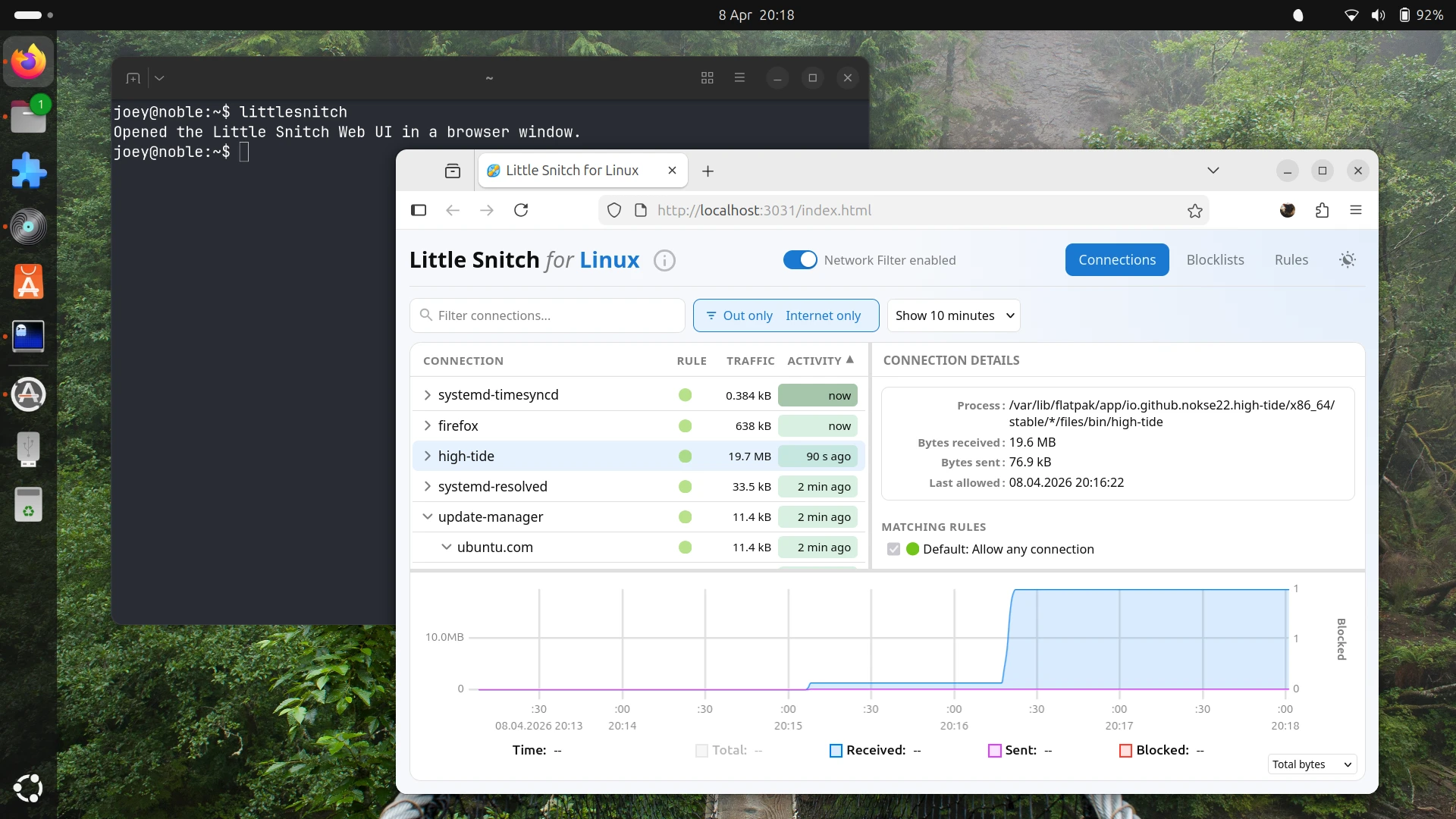
Firefox boots up. Boom — straight to Mozilla’s telemetry servers, no browsing required. And that’s before VSCode starts whispering metrics to the cloud.
Your Linux server? Suddenly not so innocent.
But hold on. Little Snitch for Linux — yeah, that bulletproof macOS guardian everyone’s relied on for two decades — just dropped for Linux. Written in Rust, powered by eBPF kernel magic, it sniffs every outbound connection like a hawk eyeing field mice. Processes begging for internet access? It flags ‘em, rules ‘em, blocks ‘em with a single click. No more blind trust in your Nextcloud or media hoarder.
Christian Starkjohann, the Austrian wizard behind Objective Development, didn’t port this for kicks. He slapped Linux on ancient hardware, fired it up, and felt stark naked. Linux tools like OpenSnitch? Close, but no cigar — they lacked that effortless process-to-connection mapping, that one-click deny punch.
“I’d installed Linux on some old hardware, and immediately felt my system was ‘naked’ without it.”
That’s Christian, straight up. He built what he craved: visibility into the digital chit-chat your machine’s having behind your back.
Why Does Little Snitch for Linux Feel Like a Platform Shift?
Think back to the early 2000s. Firewalls were clunky beasts — you’d tweak iptables configs till your eyes bled. Then Little Snitch hit macOS, turning network paranoia into a slick popup game. Linux? Still wrestling with Wireshark dumps or netstat spaghetti.
Now? eBPF flips the script. It’s kernel sorcery — sandboxed code injecting into the heart of Linux without a single kernel tweak. Little Snitch rides that wave, web UI beaming alerts to your phone from a headless server. Remote monitoring? Check. No X11 fumbling required.
Here’s my bold call, absent from the official spin: this isn’t just a port. It’s the iPhone moment for Linux privacy. Remember how macOS users ditched paranoia for proactive blocks? Linux servers — long the wild west of outbound leaks — get that superpower now. Expect a flood of eBPF privacy daemons in the next year, all chasing Little Snitch’s shadow. Your homelab NAS? It’ll thank you.
But — and it’s a big but — this ain’t your grandma’s Little Snitch.
Is Little Snitch for Linux as Ironclad as the macOS Original?
Nope. eBPF’s got handcuffs: strict resource caps, sneaky processes that dodge hooks, packets slipping attribution. macOS’s system-level filters? A fortress. Linux version plays privacy cop, not security SWAT.
Christian owns it:
“…what’s going on, and where needed, blocking connections from legitimate software that isn’t actively trying to evade it.”
On stock Ubuntu? Nine system processes hit the net in a week. macOS? Over 100. Firefox telemetry on launch — busted. LibreOffice? Silent as a vault.
It’s positioned as your “what the hell are you connecting to?” dashboard. Perfect for spotting VSCode pings or server bloatware phoning home. Evade-proof? Nah. But for taming legit apps, it’s gold.
Web interface shines here — SSH into your Pi, glance from iPhone. No VNC slog.
Rust backbone means it’s snappy, safe from buffer overflows that plague C tools. eBPF? Future-proof as kernels chase efficiency.
Does Little Snitch for Linux Play Nice Everywhere?
Kernel 6.12+, BTF-enabled. Ubuntu 25.04 or roll your own. DEBs for x64, ARM64, RISC-V — revive that ancient ThinkPad or Raspberry graveyard.
Free? Yup. Open source? Kinda. eBPF interceptor and UI? GitHub-transparent, audit away. Backend? Closed — 20 years of black magic algorithms, says Christian. Fair? They’re not hiding the hooks; that’s where trust lives.
Obdev.at for downloads. Blog post spills the beans on caveats.
Skeptical take: Linux’s OpenSnitch already apes this. Why pay homage? Because Little Snitch’s polish — that instant “deny forever” — drags everyone up. Competition? Nah, rising tide.
Picture your media server. Plex sneaking updates? Zap. Nextcloud gossiping? Gone. That old hardware gathering dust? Now a privacy fortress.
And yeah, it’s webby — no Electron bloat, just browser bliss.
Energy here feels electric. Linux privacy’s catching macOS — finally. Servers won’t leak blindly anymore.
🧬 Related Insights
- Read more: Why Your MCP App Widget Goes Blank: The Content Security Policy Trap
- Read more: No-More-Server PDF Editing: One Dev’s Browser-Only Fix for Your Secrets
Frequently Asked Questions
What is Little Snitch for Linux?
Rust-based network monitor using eBPF to catch and block process outbound connections, with a web UI for remote servers.
Does Little Snitch for Linux work on Ubuntu?
Yes, on Ubuntu 25.04+ with kernel 6.12 and BTF. DEB packages ready.
Is Little Snitch for Linux completely free and open source?
Free to use, eBPF/UI open source, backend proprietary for now.