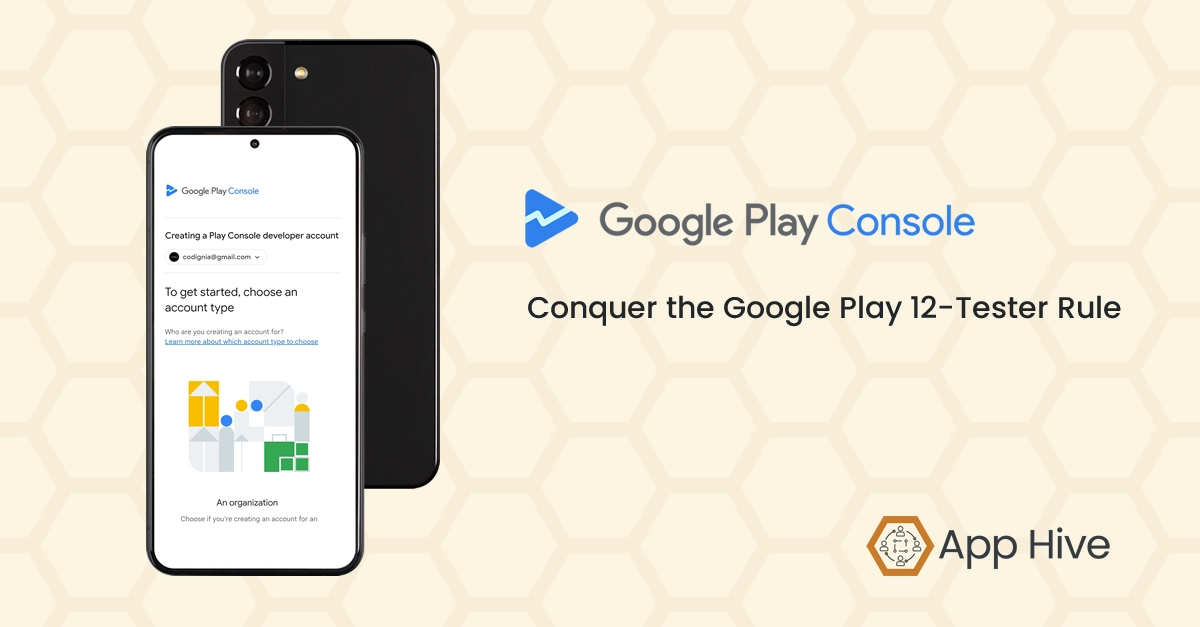
Here’s a number to stop you scrolling: 14 consecutive days. That’s the duration Google Play now demands for a closed testing phase before new personal developer accounts can push an app to production. This isn’t some soft suggestion; it’s a hard requirement for anyone registering an account after November 2023, and it’s a colossal, sanity-draining roadblock for solo developers and small teams.
The official stance? It’s a behavioral filter designed to weed out spam. The reality for indie devs? A multi-week gauntlet of recruitment, engagement tracking, and the ever-present fear of a premature reset.
The Great Wall of 12 Testers
Gone are the days of a quick upload and a prayer. If you’re a new kid on the Google Play developer block, prepare for the gauntlet. Google wants proof your app isn’t just vaporware or malware. And that proof comes in the form of a closed test with a minimum of 12 individuals. But this isn’t just about getting 12 friends to click a download link. Oh no. Google is far more sophisticated—and frustrating—than that.
The process, on paper, seems simple enough:
- Upload your app bundle (
.aab) to the Closed Testing track. - Assemble a Google Group with your testers’ emails.
- Distribute a Play Store testing link.
- Testers download directly from Google Play.
Sounds straightforward. But here’s the catch, the part that trips up nearly everyone: “14 days continuously.”
This phrase is where the real mischief lies. Many assume that once those 12 downloads are in, the clock is ticking and you’re in the clear. This is precisely the thinking that gets apps rejected. Google isn’t just counting downloads; it’s tracking continuous engagement. Think active pings. If your testers download the app on day one, then let it gather digital dust in their app drawer, your test is effectively dead on arrival.
And then there’s tester churn. A single uninstall, a tester becoming unresponsive, and your count drops. Fall below 12, and that precious 14-day clock either pauses or, worse, resets. It’s a delicate, high-stakes balancing act.
Why Your Test Might Be Failing (Even If You Think It’s Not)
Google’s human reviewers, armed with data from their automated algorithms, are looking for specific indicators of a genuine testing process. Many solo creators fail because they misunderstand these nuances.
- Emulators are a hard no. Google flags emulators and cloud browser farms instantly. They demand physical devices. If your testers are using virtual machines, it’s an automatic fail.
- Device fingerprinting. Using multiple Google accounts on the same IP address or device fingerprint—essentially, testing from your own pool of devices—will be flagged as artificial inflation. Google wants diverse, real-world usage.
- Zero feedback. No bug reports, no private track reviews, no interaction with the developer. If the data shows no engagement beyond a download, it screams “fake test.”
Google’s policy isn’t just a simple checkbox; it’s a strict behavioral filter designed to eliminate spam apps.
The Real Product Launch Mindset
To pass this hurdle, you must treat the closed testing phase not as a chore, but as a scaled-down product launch. Professionalism matters from day one. Use polished store listing descriptions and high-resolution screenshots during your test. Google reviewers look back at this.
Encourage testers to use the in-app “Contact Developer” feature. Private feedback submissions within the Play Console are a crucial signal to Google’s algorithms that genuine human interaction is occurring.
Beyond the Reddit Scramble: Building a Genuine Test Community
This is where most solo developers falter. Posting pleas on random subreddits or Facebook groups rarely yields a dedicated, engaged testing group. You’re likely to get a flurry of downloads followed by ghosting within days. What you need is a structured testing community built on mutual trust and shared goals.
Fighting this system solo is an uphill battle. The smarter play? use a structured developer community designed for this exact purpose. Platforms like App Hive on Google Play offer a cooperative ecosystem where members are fellow software creators.
By joining such a group, you gain access to a pool of 17+ real developers who understand the grind. Each member needs their app tested, creating a natural synergy. You’re not just getting random downloads; you’re participating in a reciprocal testing arrangement where everyone benefits. This structured approach ensures engagement and provides the genuine activity Google’s algorithms are looking for, helping you finally break through the 12-tester barrier and get your app to the masses. It’s a market-driven solution to a policy-driven problem.
🧬 Related Insights
- Read more: Quizlet Extension Grabs Data, Bypassing Paywalls
- Read more: Anthropic’s Quiet Enterprise AI Bet vs. OpenAI’s Revenue Race
Frequently Asked Questions
What is the Google Play 12-tester rule?
The Google Play 12-tester rule requires new personal developer accounts to conduct a closed test with at least 12 testers for 14 consecutive days before an app can be released to production.
How do I find testers for Google Play closed tracks?
You can find testers through dedicated developer communities, by building your own user base, or by leveraging platforms that facilitate developer-to-developer testing, like App Hive. Avoid random online forums which often lead to low engagement.
Will joining a community like App Hive guarantee my app passes the test?
While joining a community increases your chances significantly by providing a pool of engaged testers and a structured process, passing the review still depends on the genuine engagement of your testers and adherence to Google’s detailed guidelines, including using physical devices and providing feedback.