Genetic Algorithms Aren't Magic—Here's Why They Actually Work (and When They Don't)
Evolution doesn't need calculus. Genetic algorithms solve problems computers usually can't—by copying nature's trick: vary, select, repeat. Here's how they actually work.
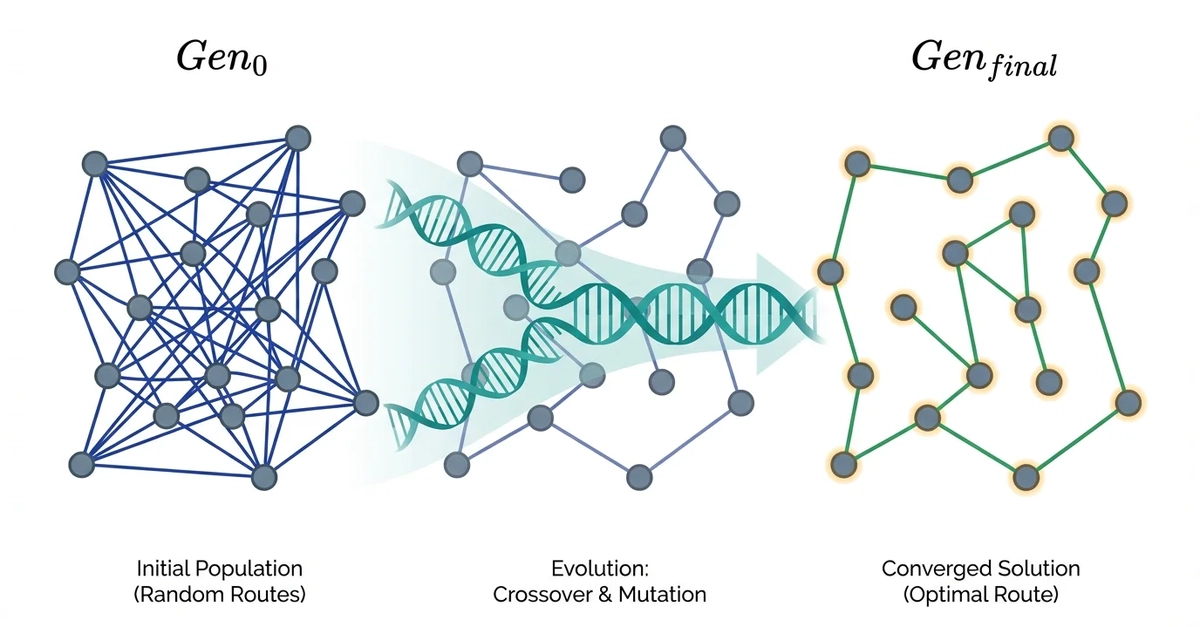
⚡ Key Takeaways
- Genetic algorithms solve optimization problems without gradients by simulating evolution: variation, selection, and mutation. 𝕏
- They're invaluable for discrete, permutation-based problems like routing and scheduling where traditional calculus fails. 𝕏
- They're not sexy, not new, and not guaranteed optimal—but they're honest, practical, and used at scale by logistics companies worldwide. 𝕏
Worth sharing?
Get the best Open Source stories of the week in your inbox — no noise, no spam.
Originally reported by Dev.to
Related Stories

AI & Machine Learning
95% of AI Projects Fail Because We're Using the Wrong Playbook

AI & Machine Learning
GPU Rowhammer Is No Longer Theory: How GPUHammer Breaks NVIDIA Graphics Memory

AI & Machine Learning
Replay Hell: Testing AI Agent Frontends with Production Ghost Streams

AI & Machine Learning