AI Testing Tools Promise Speed—But Your Team Still Needs Humans to Avoid the Hype Trap
AI-assisted testing is reshaping QA workflows, but the gap between vendor promises and reality is wider than most teams realize. We separated the genuine productivity wins from the polished pitch.

⚡ Key Takeaways
- AI testing genuinely works for mechanical tasks (test generation, data prep, bug report cleanup) but requires human oversight to avoid false confidence 𝕏
- Test code generation is the biggest risk: AI writes code that passes locally but fails under real conditions, shifting burden to review engineers instead of eliminating complexity 𝕏
- The real architectural shift is redistribution of effort—less time on mechanics, more on judgment—which means reorganizing teams around senior engineers, not reducing headcount 𝕏
- Defect prediction and accessibility testing are high-ROI wins; test code generation requires heavy review; localization testing works well as a hybrid approach 𝕏
Worth sharing?
Get the best Open Source stories of the week in your inbox — no noise, no spam.
Originally reported by DZone
Related Stories

AI & Machine Learning
95% of AI Projects Fail Because We're Using the Wrong Playbook

AI & Machine Learning
GPU Rowhammer Is No Longer Theory: How GPUHammer Breaks NVIDIA Graphics Memory
AI & Machine Learning
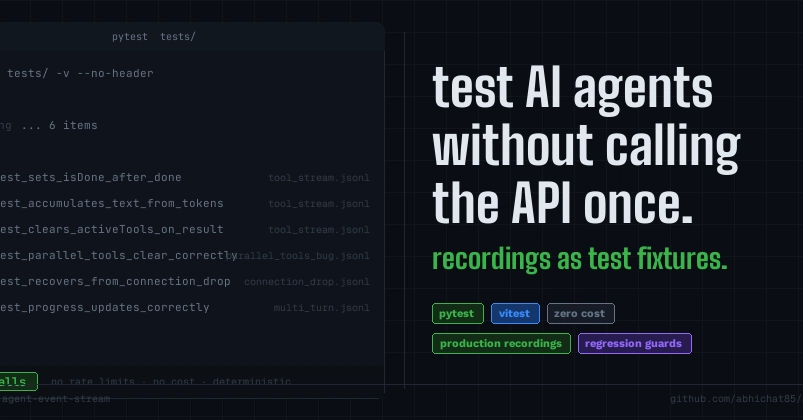
Replay Hell: Testing AI Agent Frontends with Production Ghost Streams

AI & Machine Learning